

Slash Your Maintenance Bill by Buying 3-Inch Chlorine Tablets in Bulk
Find the Cheapest 3 Chlorine Tablets 25 lbs Without Sacrificing Value
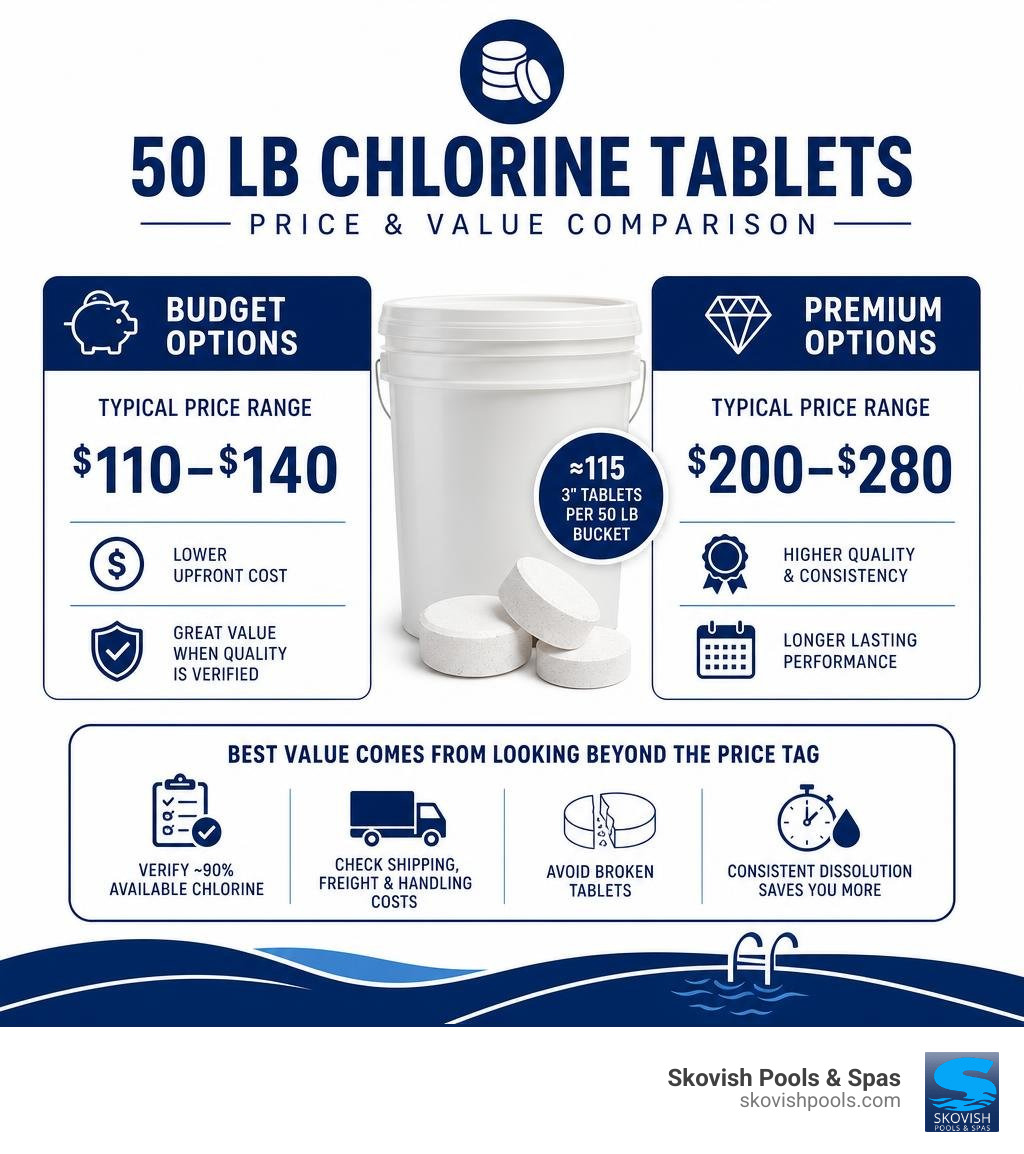
The cheapest 3 chlorine tablets 50 lbs are often budget stabilized trichlor buckets priced around $110 to $140, while premium-name options can run roughly $200 to $280. Before buying, compare the delivered price per pound, confirm the label lists about 90% available chlorine, and check whether shipping, freight, or handling charges erase the apparent savings.
A 50 lb bucket typically holds about 115 three-inch tablets. For many home pools, that can be a season-long supply: standard guidance is one to two tablets per 10,000 gallons each week, adjusted based on regular water testing. The lowest-priced bucket is not always the lowest-cost choice if tablets arrive broken, dissolve too quickly, or contain more inactive material.
I am Marty Skovish, Senior Manager at Skovish Pools & Spas, with more than four decades of pool construction and maintenance experience in Northeastern Pennsylvania. I help homeowners assess cheapest 3 chlorine tablets 50 lbs options based on real pool needs, water chemistry, and total maintenance cost.
Finding the Cheapest 3 Chlorine Tablets 50 lbs: Pricing and Quality Factors
When you manage a swimming pool, purchasing sanitizers in larger volumes is one of the easiest ways to keep your seasonal operating costs under control. As of August 2026, routine pool maintenance demands smart shopping, and buying a 50 lb pail of 3-inch tablets offers a significantly lower cost per pound than purchasing smaller 5 lb or 25 lb containers.
However, looking strictly at the lowest shelf tag can lead to unexpected trade-offs. The bulk chlorine marketplace generally divides into two distinct pricing tiers:
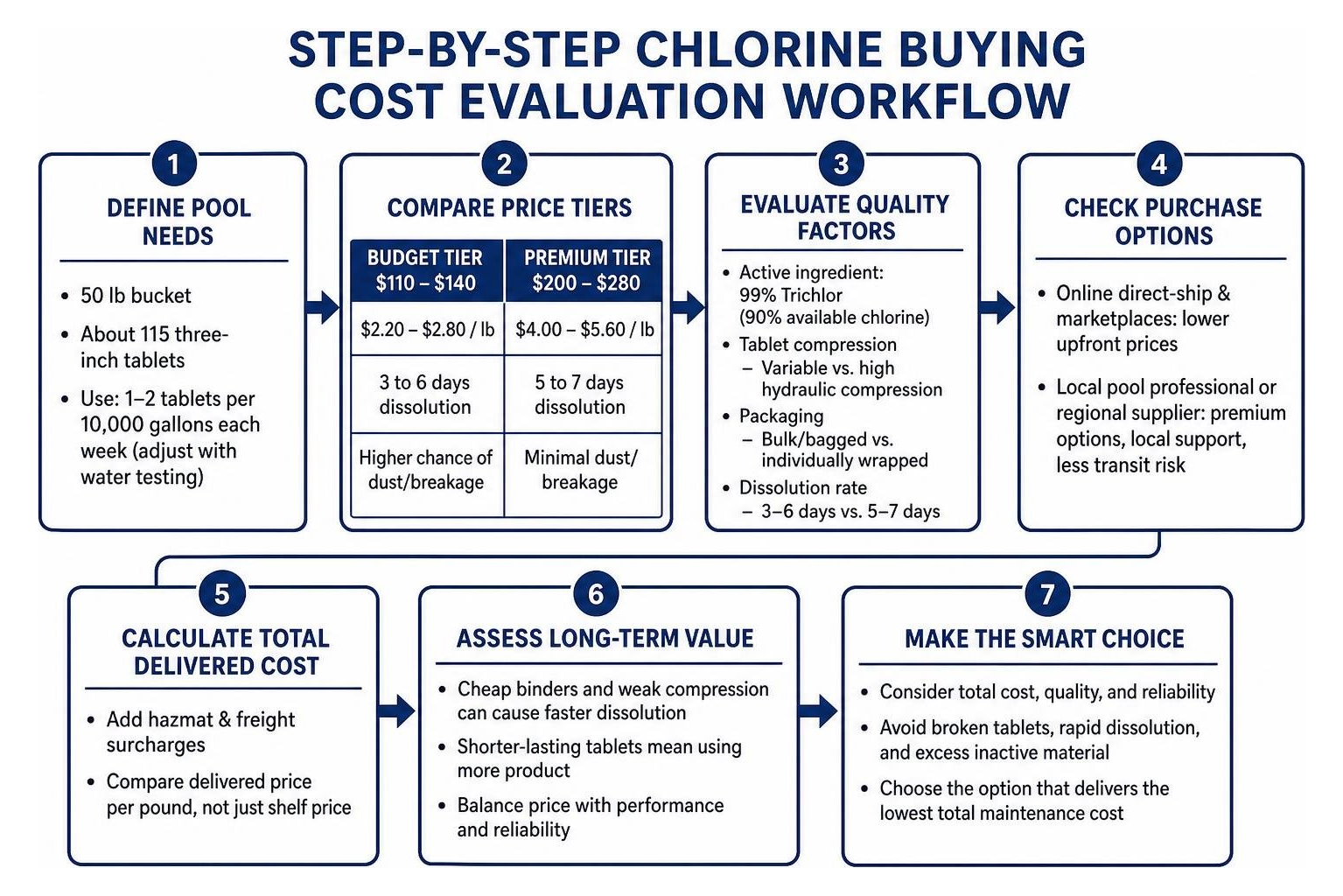
| Feature / Tier | Budget Tier ($110 – $140) | Premium Tier ($200 – $280) |
|---|---|---|
| Typical Cost per Pound | $2.20 – $2.80 / lb | $4.00 – $5.60 / lb |
| Active Ingredient Concentration | 99% Trichlor (90% Available Chlorine) | 99% Trichlor (90% Available Chlorine) |
| Tablet Compression | Variable; higher chance of dust/breakage | High hydraulic compression; minimal dust |
| Packaging | Bulk stacked or plastic bagged | Individually wrapped, heavy-duty seal |
| Dissolution Rate | 3 to 6 days | 5 to 7 days (controlled release) |
| Shipping Fees | Often added at checkout (Hazmat/freight) | Frequently included or locally stocked |
Understanding what drives these price discrepancies ensures you do not waste money on products that deliver inferior results in your water.
Where to Find the Cheapest 3 Chlorine Tablets 50 lbs Online vs. In-Store
Online retailers and direct-to-consumer chemical suppliers frequently showcase enticing upfront prices that can look like a huge bargain on the surface. Major e-commerce platforms also list budget options.
On the other hand, visiting a local pool professional or reviewing specialized regional offerings gives you immediate access to premium, highly compressed product lines. Working with the top PA pool chemical supplier eliminates cross-country transit risks, prevents handling damage, and lets you speak directly with experienced technicians who understand local water conditions.
Hidden Costs: Shipping, Binders, and Premature Dissolution
A deeply discounted 50 lb tub can quickly lose its appeal once you factor in the fine print:
- Hazmat and Freight Surcharges: Concentrated chlorine is an oxidizer (Class 5.1 hazardous material). Carriers charge extra handling fees for heavy chemical freight. A bucket priced at $110 with a $35 shipping fee suddenly costs more than a $140 bucket picked up locally.
- Cheap Binders and Rapid Dissolution: Budget manufacturers sometimes use weak compression or cheap binding agents. If a tablet melts away in three days instead of lasting a full week, you will burn through your 50 lb supply twice as fast.
- Shipping Breakage: Rough transit turns brittle tablets into unusable powder at the bottom of the container. While chlorine dust still sanitizes, dumping loose powder into a floater causes instant chemical spikes and wastes product.
How Active Ingredients and Tablet Quality Impact Real Value
The true value of any sanitizer lies in its chemical formulation. Standard 3-inch pool tablets are made of Trichloro-s-triazinetrione (commonly called trichlor). High-grade trichlor contains 99% active ingredient and yields 90% available chlorine.
Choosing quality pool spa chemicals ensures that your sanitizer dissolves at a steady, predictable rate while keeping your water crystal clear and free of pathogenic bacteria and algae.
Evaluating the Cheapest 3 Chlorine Tablets 50 lbs by Active Ingredients
Always read the guaranteed analysis label on the container. High-quality trichlor tablets feature:
- 99% Trichloro-s-triazinetrione: Maximizes sanitizing strength per ounce.
- 90% Available Chlorine: Delivers steady free chlorine to eliminate biological contaminants.
- Built-in Cyanuric Acid (CYA): Shields the free chlorine from being rapidly degraded by ultraviolet sunlight.
- Minimal Inert Ingredients (1% or less): Prevents unwanted insoluble residue from clogging your filter grids or cartridges.
Low-cost tablets with excessive fillers reduce sanitizing power and leave cloudy residues in your skimmers and chemical feeders.
Trichlor vs. Alternative Sanitizers in Long-Term Maintenance
Trichlor tablets are acidic (pH ~2.8 to 3.0) and continuously introduce Cyanuric Acid (stabilizer) into your pool. For every 10 ppm of free chlorine added by a trichlor tab, you also add roughly 6 ppm of CYA.
Over time, excessive CYA levels (above 80–100 ppm) cause chlorine lock, where the stabilizer binds too tightly to the chlorine molecules, rendering them ineffective at killing algae. When comparing chlorine vs bleach pool maintenance sanitization, pool owners often pair stabilized trichlor tabs for steady baseline chlorination with unstabilized liquid chlorine or calcium hypochlorite for weekly shocking to keep CYA levels balanced.
If you are exploring other equipment setups, understanding chlorine vs saltwater hot tubs which is better for your backyard can help you decide if automated electrolytic chlorine generation aligns with your maintenance goals.
Calculating Lifespan and Dosage for a 50 lb Bucket
A standard 50 lb bucket contains roughly 115 three-inch tablets, with each tablet weighing approximately 200 grams (7 ounces).
Having the right pool maintenance supplies on hand makes dosage calculations straightforward:
- Standard Dosage Rate: 1 to 2 tablets per 10,000 gallons of pool water every 7 days.
- Average Residential Pool (20,000 Gallons): Requires 2 to 4 tablets weekly.
- Bucket Longevity: A 50 lb pail providing ~115 tabs will supply a 20,000-gallon pool for approximately 28 to 50 weeks, easily covering an entire Northeast swimming season with plenty left over for opening the following spring.
Residential vs. Commercial Pool Lifespan
Sanitizer consumption depends directly on biological demand:
- Residential Pools: Modest bather loads and standard 8-hour daily pump run times mean tablets dissolve slowly and consistently over 5 to 7 days.
- Commercial Pools: Water parks, community pools, and hotel facilities experience heavy bather loads, elevated water temperatures, and continuous 24/7 pump cycles. In commercial environments, a 50 lb bucket may be depleted in just a few weeks to meet health code standards.
Pool Compatibility: Vinyl Liners, Saltwater Systems, and Plaster
Bulk 3-inch trichlor tablets are versatile across all pool types when dispensed correctly:
- Vinyl Liner Pools: Never toss tablets directly into the pool. Trichlor will sink to the bottom, bleaching and weakening the vinyl liner within hours.
- Plaster and Gunite Pools: Loose tablets resting on plaster will cause localized chemical etching, pitting, and stubborn stains.
- Fiberglass Pools: High concentrations of direct acid from resting tablets can cause osmotic blistering and gelcoat discoloration.
- Saltwater Pools: Trichlor tabs serve as an excellent backup sanitizer during high-heat waves, pool parties, or when salt cells require inspection and cleaning.
Best Practices for Dosing and Dispensing Bulk Chlorine Tablets
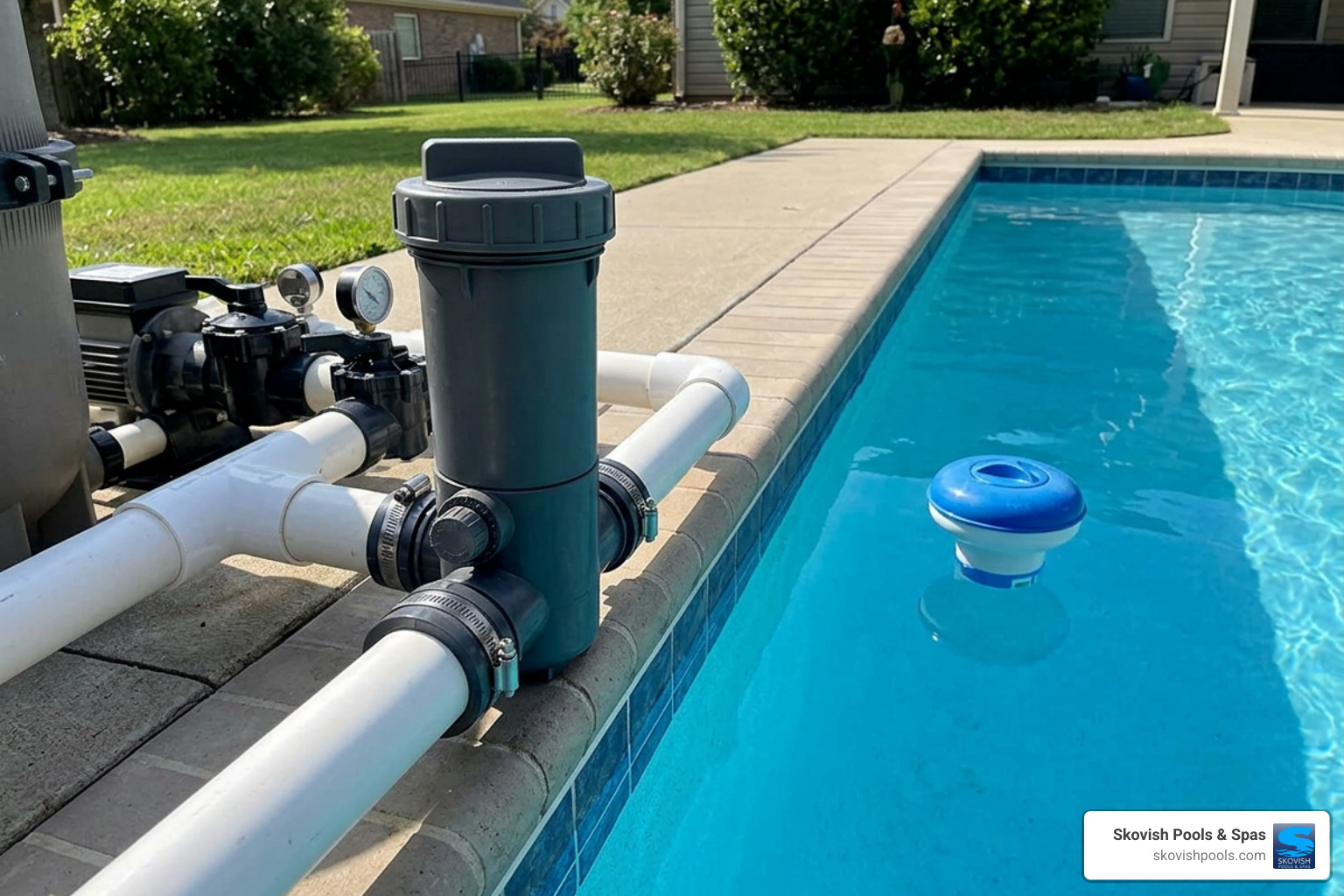
To get the longest life out of your bulk chlorine investment and protect your pool equipment, follow these practical dispensing guidelines:
- Use an Inline or Offline Chemical Feeder: We strongly recommend installing a dedicated automatic chemical feeder (such as Hayward inline chlorinators). These units plumb directly into your return line, allowing you to dial in precise erosion rates while keeping concentrated acidic water away from your pump and heater.
- Use a Quality Floating Dispenser: If an inline chlorinator is not an option, use a heavy-duty floating chlorine dispenser with an adjustable collar to control water flow around the tabs. Always remove floating dispensers when swimmers are in the pool.
- Avoid Skimmer Basket Dosing: Placing tablets directly inside skimmer baskets exposes your pump seals, gaskets, filter tanks, and heater elements to highly acidic, hyper-chlorinated water whenever the pump turns off.
- Maintain Water Circulation: Run your filtration pump for at least 8 hours every day. Flowing water prevents localized chemical stagnation and ensures even distribution of sanitizer across the entire pool.
- Practice Safe Storage: Keep your 50 lb bucket sealed tightly in a cool, dry, well-ventilated location away from gasoline, fertilizers, acids, and direct sunlight.
Frequently Asked Questions About Bulk Chlorine Tablets
Can I use 3-inch chlorine tablets to shock my swimming pool?
No. Three-inch trichlor tablets are designed for slow, steady dissolution over 5 to 7 days. Shocking a pool requires a rapid elevation of free chlorine to break down combined chloramines and destroy algae blooms instantly. Always use fast-dissolving liquid chlorine or calcium hypochlorite shock treatments for pool shocking.
How long does a 50 lb bucket of 3-inch chlorine tablets last for an average pool?
For a typical 15,000 to 20,000-gallon backyard swimming pool using 2 to 3 tablets per week, a 50 lb bucket (containing roughly 115 tablets) will last between 35 and 55 weeks of continuous seasonal operation.
Why are my 3-inch chlorine tablets not dissolving properly?
Slow dissolution is usually caused by inadequate water flow. Check if your pool pump run time is under 8 hours per day, verify that your chlorinator dial is adjusted to an open setting, or inspect the feeder lines and check valves for debris or air locks.
Maximizing Your Bulk Chemical Savings This Season
Buying sanitizing chemicals in bulk is one of the smartest ways to keep your backyard oasis pristine without overspending. By looking beyond the sticker price, verifying active ingredient purity, and accounting for delivery fees, you can secure dependable water clarity all summer long.
For more than 50 years, our family-owned team at Skovish Pools & Spas has served pool owners throughout Luzerne County and Northeastern Pennsylvania. Whether you need free design consultations, equipment upgrades, or professional water testing, visit our stores in Luzerne and Shickshinny for expert guidance and lifelong pool care.


