

Warm Up Your Swim with Expert Electric Pool Heater Repair
Common Causes of Electric Pool Heater Heating Failures
Successful electric pool heater repair starts by verifying dedicated 240V power at the breaker panel, checking the digital display for diagnostic fault codes, confirming strong water flow through clean filters, and testing heating elements, capacitors, and safety switches with a digital multimeter. Electric heaters, whether direct-element units or heat pumps, rely on continuous electrical supply, precise water circulation, balanced chemistry, and calibrated sensors to warm your pool efficiently.
Water temperature loss often stems from issues that develop gradually. For instance, Luzerne Residents Lookout Signs Failing Pool Equipment because unnoticed scale accumulation or failing flow switches can quietly shut down a heating cycle before the pool ever reaches your target temperature. Scale buildup acts as an insulating blanket over internal heat exchangers, trapping heat inside the unit and triggering thermal limit switches rather than transferring that warmth into your pool.
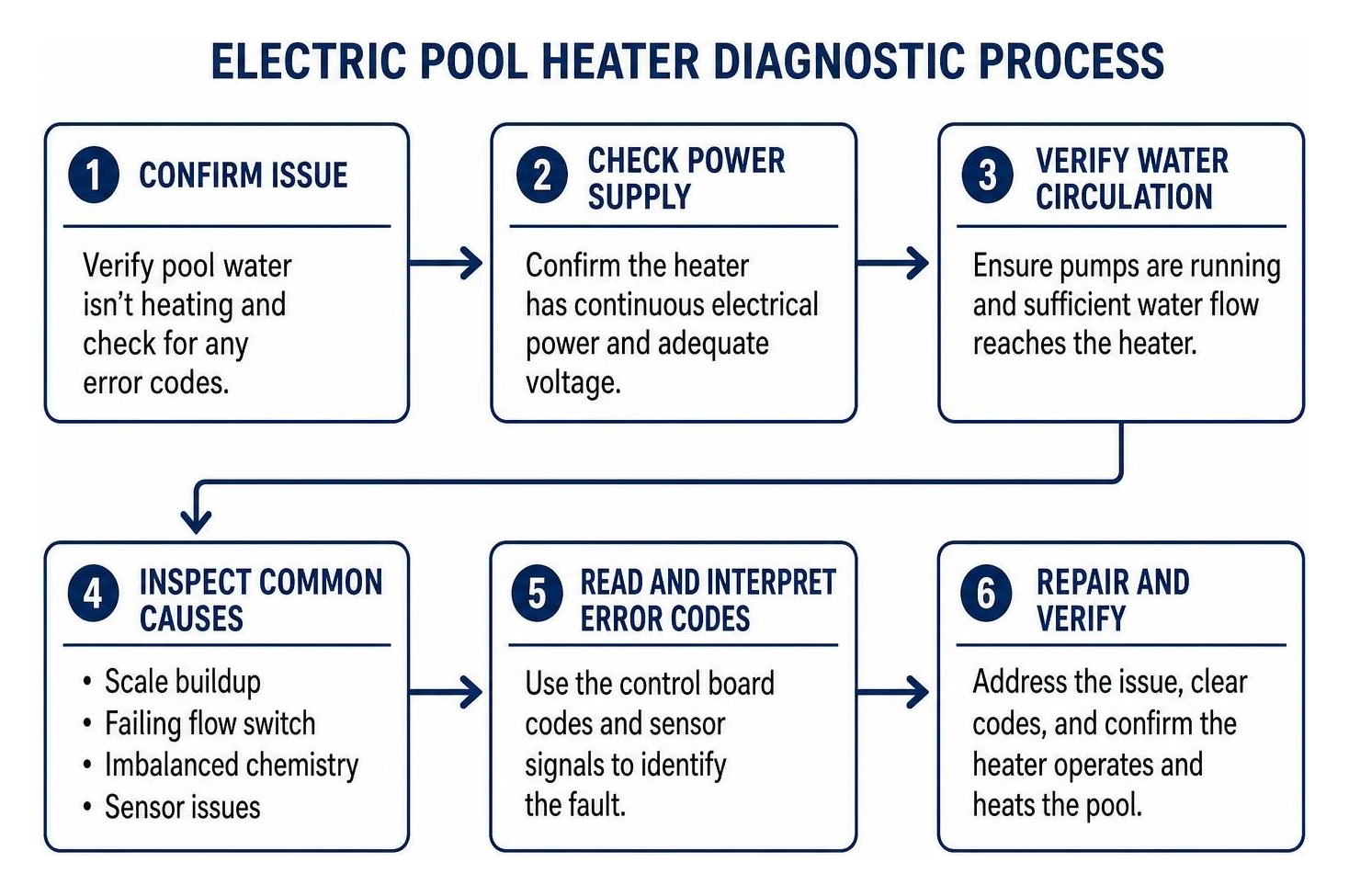
Interpreting Diagnostic Error Codes and Sensor Signals
Modern electric heating systems feature digital control boards that constantly monitor system health. When a safety parameter is breached, the unit displays a specific error code to protect itself from severe damage.
- FLO or FL: Indicates low or no water flow. The internal pressure switch or flow sensor does not detect enough water moving through the unit to safely carry away heat.
- HI or HP: Signals high-limit or high-pressure switch trips. This occurs when water temperatures inside the heat exchanger exceed safe thresholds or when refrigerant pressure spikes.
- LO or LP: Points to low refrigerant pressure or low ambient operating temperatures, often seen when running heat pumps below their operational temperature range.
- tMS or PS: Identifies temperature sensor errors, thermistor open circuits, or pressure switch wiring faults.
Consulting a comprehensive electric pool heater troubleshooting guide helps you decode manufacturer-specific fault sequences and verify whether a simple power cycle clears a temporary sensor glitch.
Water Flow and Filtration System Obstructions
An electric pool heater cannot heat stagnant water. If water volume drops below manufacturer thresholds, the internal pressure switch opens its contacts, immediately cutting power to the heating elements or compressor.
Clogged skimmer baskets, full pump strainer pots, and heavily loaded filter media are the most frequent causes of flow-related shutdowns. When filter pressure climbs 8 to 10 PSI over baseline clean pressure, flow rates drop substantially. Exploring 3 Reasons to Upgrade Your Pool Pump and Filter can help ensure your circulation equipment produces the steady gallons-per-minute (GPM) required for optimal heater operation.
Step-by-Step Guide to Electric Pool Heater Repair
Addressing equipment faults requires a logical process that isolates electrical, mechanical, and hydraulic components in sequence.
Essential Tools and Safety Precautions for Electric Pool Heater Repair
Before removing service panels, assemble the proper diagnostic tools:
- Digital multimeter rated for CAT III/IV applications
- Insulated hand tools (screwdrivers, nut drivers, wire strippers)
- Non-contact voltage tester
- Safety glasses and insulated gloves
Safety First: Never touch internal components without executing a lockout/tagout procedure. Switch off the dedicated heater breaker at the main service panel, trip the local disconnect switch at the equipment pad, and use your multimeter to verify zero voltage across all incoming terminals.
Diagnosing Power Supply and Circuit Breaker Issues
Electric pool heaters operate on dedicated 240V circuits, commonly drawing between 30 and 50 amps depending on BTU output.
- Inspect Breakers: Check your breaker panel for a tripped switch. A breaker stuck in the middle position indicates an overcurrent event or a ground fault.
- Reset the GFCI: Switch the breaker firmly to the full OFF position before returning it to ON.
- Check Terminal Connections: Open the heater electrical junction enclosure and inspect terminal lugs. Vibrations and outdoor temperature swings can loosen wires, creating high-resistance hotspots that melt insulation and drop operating voltage.
- Test Voltage: With proper precautions, verify line voltage measures between 220V and 240V across the incoming L1 and L2 lugs.
Inspecting and Replacing Heating Elements and Capacitors
Direct-element electric heaters use resistive heating coils, while heat pumps rely on run capacitors to start and operate fan motors and compressors.
- Element Continuity: Disconnect power completely. Remove the lead wires from the heating element studs. Set your multimeter to Ohms (resistance) and place probes across the two terminal studs. A functional element typically reads between 10 and 30 ohms; a reading of zero indicates a dead short, while infinite resistance indicates an open, broken coil.
- Ground Fault Testing: Place one probe on an element terminal and the other on the metal heater casing. Any continuity reading indicates a compromised element sheath that is leaking voltage into the water.
- Capacitor Inspection: Heat pump capacitors should be discharged safely using a high-ohm resistor before testing. Use a multimeter with capacitance (microfarad / µF) settings to confirm the reading matches the rating stamped on the capacitor casing within a ±5% tolerance.
Calibrating Thermostats and Testing Safety Switches
If the heater runs continuously without reaching the setpoint, or shuts off prematurely, check the temperature sensor and safety switches:
- Thermistor Calibration: Remove the water temperature probe wires from the control board. Measure resistance with your multimeter and compare it against the manufacturer’s temperature-resistance chart. A drifting thermistor will report that 70°F water is 90°F, preventing heat activation.
- High-Temperature Cutoff Testing: Test the high-limit switch for continuity while cool. If the switch remains open at ambient pool temperatures, its internal bimetal disc has failed and the switch requires replacement.
- Pressure Switch Adjustment: If filter cleaning does not resolve a flow error, inspect the water pressure switch. Ensure the small sensing tube is clear of mineral buildup before testing the switch for continuity while the pump is active.
Deciding Between Pool Heater Repair and Replacement
Repairing minor electrical or hydraulic faults keeps equipment running smoothly, but older units with major component breakdowns often call for full replacement.
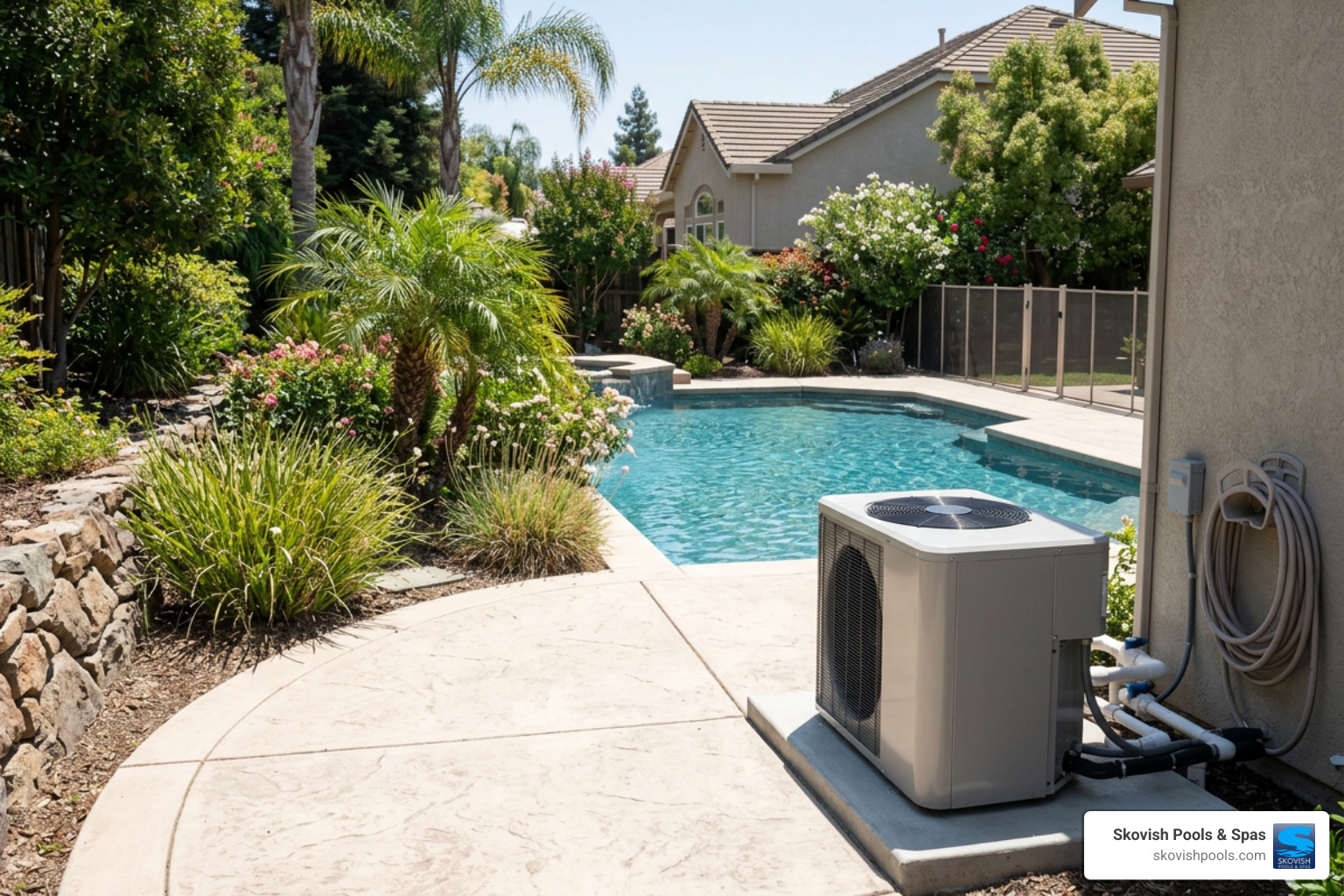
When to Choose Replacement Over Electric Pool Heater Repair
Understanding equipment lifespans helps avoid sinking money into failing machinery. While gas heaters remain effective for about 5 years and typically last 7 to 12 years with diligent care, heat pump pool heaters last 10 to 15 years because they have fewer combustion components. However, when evaluating Swimming Pool Heat Pump vs Pool Gas Heater options, evaluate the 50% repair rule: if the repair estimate exceeds 50% of the cost of a new unit and your heater is beyond 8 years old, replacement delivers far better long-term reliability.
Severe faults such as a cracked titanium heat exchanger, severe copper corrosion, or a seized compressor make replacement the most practical path forward. Reviewing Should You Repair or Replace Your Pool NEPA alongside seasonal incentives like the Pool Equipment Sale 2025 provides clarity on upgrading aging equipment with modern, efficient options.
Cost and Efficiency Comparison for Electric Units
Heat pumps cost 50 to 80 percent less to operate than gas heaters. A heat pump costs $1 to $2 per hour to heat a pool, compared to up to $20 per hour using propane and $9 per hour using natural gas. Assessing Energy Efficient Pool Heating Options Pros Cons reveals how modern units offset their initial installation costs through utility savings.
| Parameter | Minor Component Repair | Major Component Replacement | Full Heat Pump Replacement |
|---|---|---|---|
| Typical Cost Range | $150 – $400 | $600 – $1,500 | $4,500 – $9,000+ |
| Common Parts Involved | Sensors, Capacitors, Flow Switch | Control Board, Fan Motor, Element Bundle | Complete System, Pad Prep, Wiring |
| Expected Added Lifespan | 2 to 5 Years | 1 to 3 Years | 10 to 15 Years |
| Operating Efficiency Impact | Restores Factory Baseline | Minor Efficiency Recovery | 30% to 50% Utility Cost Reduction |
| Hourly Operating Cost | $1.00 – $2.00 / hr | $1.00 – $2.00 / hr | $1.00 – $1.50 / hr |
Preventative Maintenance to Avoid Equipment Breakdown
Consistent upkeep protects delicate electronics and heat-exchange surfaces from unnecessary wear.
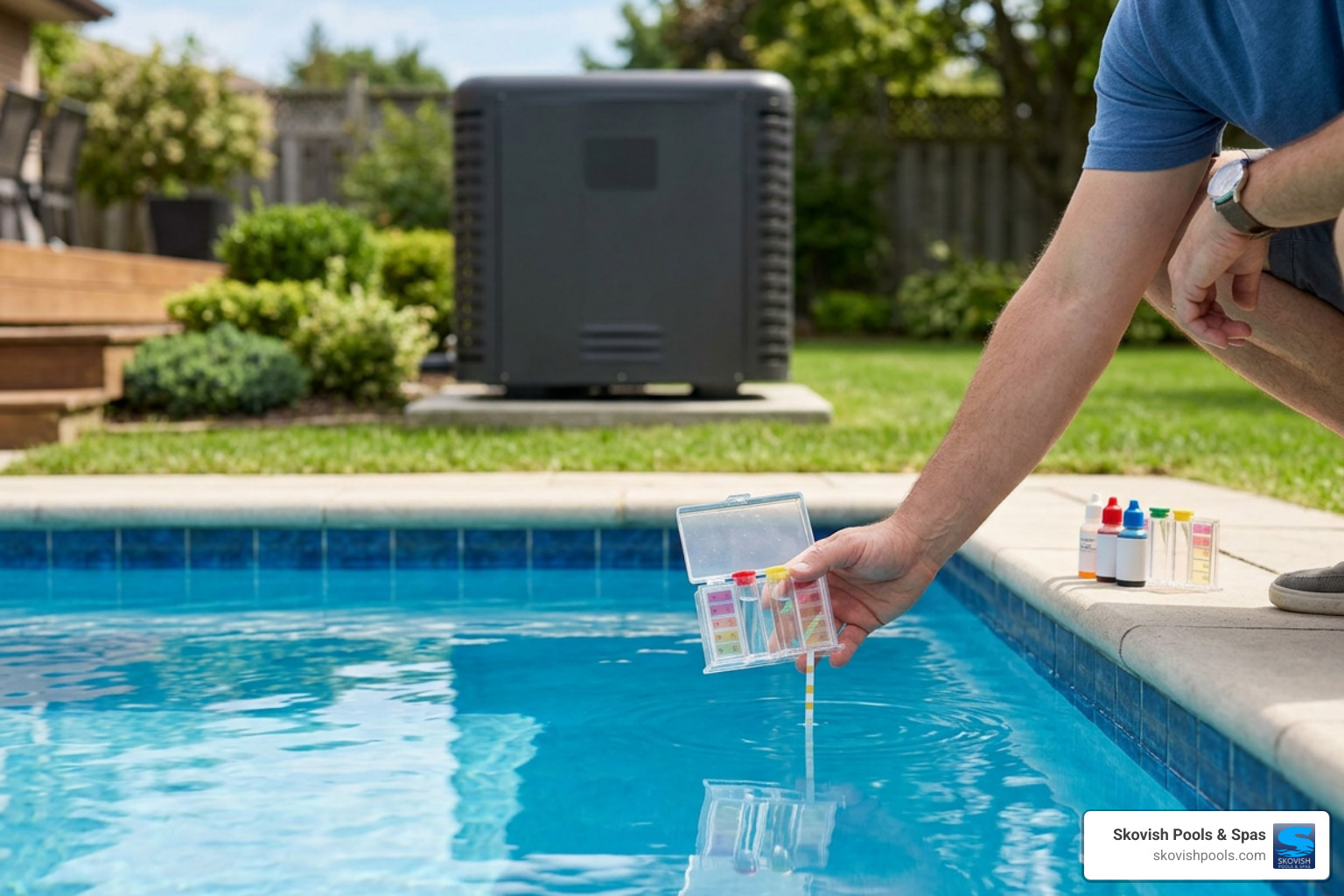
Water chemistry is the leading factor in premature heater failure. Low pH (below 7.2) turns pool water acidic, stripping copper and corroding electrical sensor wells. Conversely, high pH and elevated calcium hardness cause scale to precipitate on heating elements and inside exchanger tubes. Learning how Hard Water Effects Not Only Your Home Fixtures But Pool Equip Too helps you maintain balanced total alkalinity and calcium levels between 200 and 400 ppm.
Annual maintenance costing $100 to $200 prevents issues such as excessive noise, surging energy bills, and malfunctioning controls. In addition:
- Keep at least 24 inches of clear space around heat pump evaporator coils for unobstructed airflow.
- Rinse evaporator fins gently with low-pressure water to remove pollen, leaves, and dust.
- Inspect wiring enclosures for signs of rodent nesting or insect intrusion before seasonal startup.
- Choose reliable hardware designed to streamline seasonal maintenance; take time to Consider Pool Equipment Make Maintenance Easier throughout your backyard setup.
Frequently Asked Questions About Pool Heater Troubleshooting
Why is my electric pool heater running but the water stays cold?
This usually occurs when heat loss exceeds the unit’s thermal output. During cool nights with brisk winds, uninsulated pool surfaces lose heat rapidly. Using a solar cover retains water temperature and cuts heat loss by up to 70%. Additionally, check your plumbing bypass valves to confirm water is circulating through the heater rather than bypassing it completely.
How do I reset a tripped high-temperature cutoff switch?
Locate the high-limit switch housing, which is often positioned near the heat exchanger manifold. Turn off power at the breaker, let the unit cool for 20 minutes, and press the small red rubber button centered on the switch body until you feel a distinct click. If the switch trips again immediately upon startup, check for water flow restrictions or scale buildup.
How long does an electric pool heat pump typically last?
Most electric pool heat pumps last 10 to 15 years when properly maintained and protected from aggressive water chemistry. Because they utilize closed-loop refrigeration circuits rather than open flame combustion, their mechanical wear rate is significantly lower than gas alternatives.
Keep Your Backyard Warm and Worry-Free
Troubleshooting an electric pool heater starts with checking the simple things—verifying clean water flow, testing power delivery, and checking thermostat calibrations. While regular maintenance and minor sensor swaps are manageable for handy pool owners, diagnosing 240V power feeds, high-voltage capacitors, and sealed internal components requires dedicated diagnostic equipment and professional training.
For reliable diagnostic assessments, seasonal inspections, and expert repairs across Luzerne County, count on our team at Skovish Pools & Spas to keep your water warm and your equipment running at peak performance. Explore our professional pool equipment repair and maintenance services to schedule a consultation and enjoy a comfortable swim season all year long.


