

Hot Water, Easy Chemistry: How to Keep Your Spa Balanced
Understanding Hot Tub Water Chemistry vs. Pool Care
Many new spa owners make the mistake of treating their hot tub like a mini swimming pool. However, a spa environment operates under entirely different physical and chemical rules.
The primary reason hot tub water chemistry is so unique comes down to high water temperatures. Hot tubs typically operate between 100°F and 104°F, whereas swimming pools are usually kept around 80°F to 82°F. In thermodynamics, every 18°F (10°C) increase in water temperature doubles the speed of chemical reactions. This rapid reaction rate causes sanitizers to deplete dramatically faster and accelerates carbon dioxide off-gassing, which naturally drives your pH upward.
To make things more challenging, consider the water-to-bather ratio:
- A typical hot tub holds 300 to 500 gallons of water, while an average inground pool contains 15,000 to 25,000 gallons.
- Two people soaking in a 400-gallon hot tub create the proportional organic contaminant load of approximately 50 to 250 people swimming in a large pool.
- Two bathers can easily consume 1 ppm of free chlorine in just the first 15 minutes of a soak.
Furthermore, warm spa water opens skin pores and accelerates human perspiration and oil release, introducing body lotions, sweat, and cosmetics directly into a tiny volume of water. Because warm, nutrient-rich water creates an ideal breeding ground for heat-tolerant bacteria like Pseudomonas aeruginosa (the culprit behind hot tub rash) and Legionella, maintaining tight chemical balance is far more critical in a spa than in a pool. You can learn more by checking out this Hot Tub Water Chemistry Guide.
| Water Parameter / Condition | Standard Swimming Pool | Hot Tub / Spa |
|---|---|---|
| Average Water Volume | 15,000 to 25,000 gallons | 300 to 500 gallons |
| Operating Temperature | 78°F – 82°F | 100°F – 104°F |
| Chemical Reaction Speed | Baseline rate | 2x to 4x faster |
| Water Turnover Time | 6 to 8 hours | 15 to 30 minutes |
| Bather-to-Water Load Ratio | Dilute | Extremely concentrated |
| Sanitizer Depletion Rate | Gradual (over days) | Rapid (over minutes/hours) |
Essential Chemicals and Target Ranges
Achieving perfectly balanced spa water doesn’t require a chemistry degree, but it does demand precision. Because you are treating a small body of water, adding even a tablespoon too much of any chemical can swing your numbers wildly out of balance.
Essential Parameters in Hot Tub Water Chemistry
To keep your spa running smoothly, you need to monitor four key parameters using test strips or a liquid test kit 2 to 3 times per week:
- Total Alkalinity (TA): Target range 80 to 120 ppm. Total alkalinity measures the dissolved alkaline substances in the water. Think of TA as a buffer or “shock absorber” for your pH. If your TA is too low, your pH will bounce erratically. If your TA is too high, your pH will lock up at a high level and become nearly impossible to lower.
- pH Level: Target range 7.2 to 7.8 (ideal 7.4 to 7.6). pH measures how acidic or basic your water is on a scale of 0 to 14. If pH drops below 7.2, the water becomes corrosive, eating away at metal heater elements, damaging pump seals, and causing severe skin/eye sting. If pH rises above 7.8, sanitizers lose 20% to 30% of their killing power, minerals precipitate out of solution to form scale, and water turns cloudy.
- Calcium Hardness: Target range 150 to 250 ppm for acrylic spas. Calcium hardness measures dissolved minerals. Water naturally craves calcium. If your water is too soft (below 100 ppm), it will aggressively leach calcium directly from your spa’s internal metal hardware and heaters, while also causing excessive surface foaming. If calcium exceeds 300 ppm, white scale deposits will form on spa walls and clog heating elements.
- Sanitizer Level: Keeps pathogenic bacteria and organic waste under control. Free chlorine should read 3 to 5 ppm, while bromine should sit between 4 to 6 ppm.
For precise dosage calculations based on your spa’s volume, check this Hot Tub Chemical Dosing Guide. For more details on routine parameter care, visit our comprehensive Hot Tub Maintenance Water Care Guide.
Chlorine vs. Bromine Sanitizers
Choosing the right primary sanitizer comes down to user preference, budget, and skin sensitivity. Both do a fantastic job of destroying contaminants, but they function differently in hot water:
- Chlorine (Sodium Dichlor): Fast-acting, economical, and easy to apply in granular form. Chlorine sanitizes by oxidizing organic compounds. However, as it works, it binds with nitrogen and ammonia from bather waste to form chloramines. Chloramines produce that harsh “chlorine smell” and cause eye redness. Chlorine also degrades faster at high temperatures and requires regular shock treatments to stay active.
- Bromine: Slower-acting but far more chemically stable in high-temperature environments (100°F+). Bromine forms bromamines as it sanitizes, but unlike chloramines, bromamines remain active sanitizers and produce almost no chemical odor. Bromine is also much gentler on sensitive skin and eyes. The drawback? Bromine cannot be stabilized against UV light using cyanuric acid, making it best suited for indoor or covered outdoor spas.
Note: Never mix dry chlorine and bromine chemicals together, and never pour them into the spa simultaneously. Combining them creates a hazardous chemical reaction.
Step-by-Step Maintenance and Dosing Routine
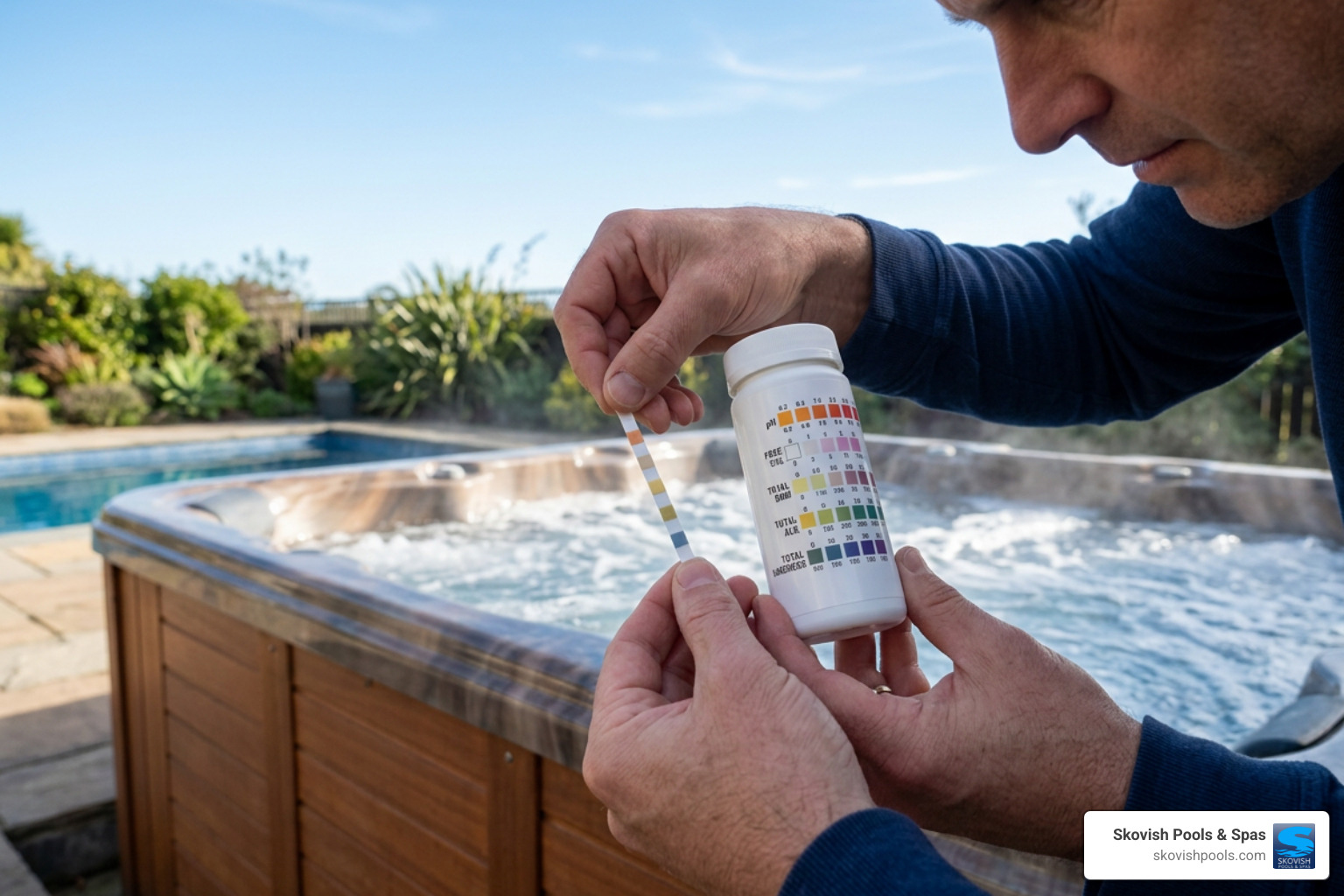
Establishing a predictable dosing sequence prevents chemical interference, keeps water clear, and avoids wasting money on unnecessary corrective products.
Step-by-Step Hot Tub Water Chemistry Dosing Sequence
The sequence in which you add balancing chemicals is critical. Adding chemicals out of order is the leading cause of chronic cloudy water and pH instability.
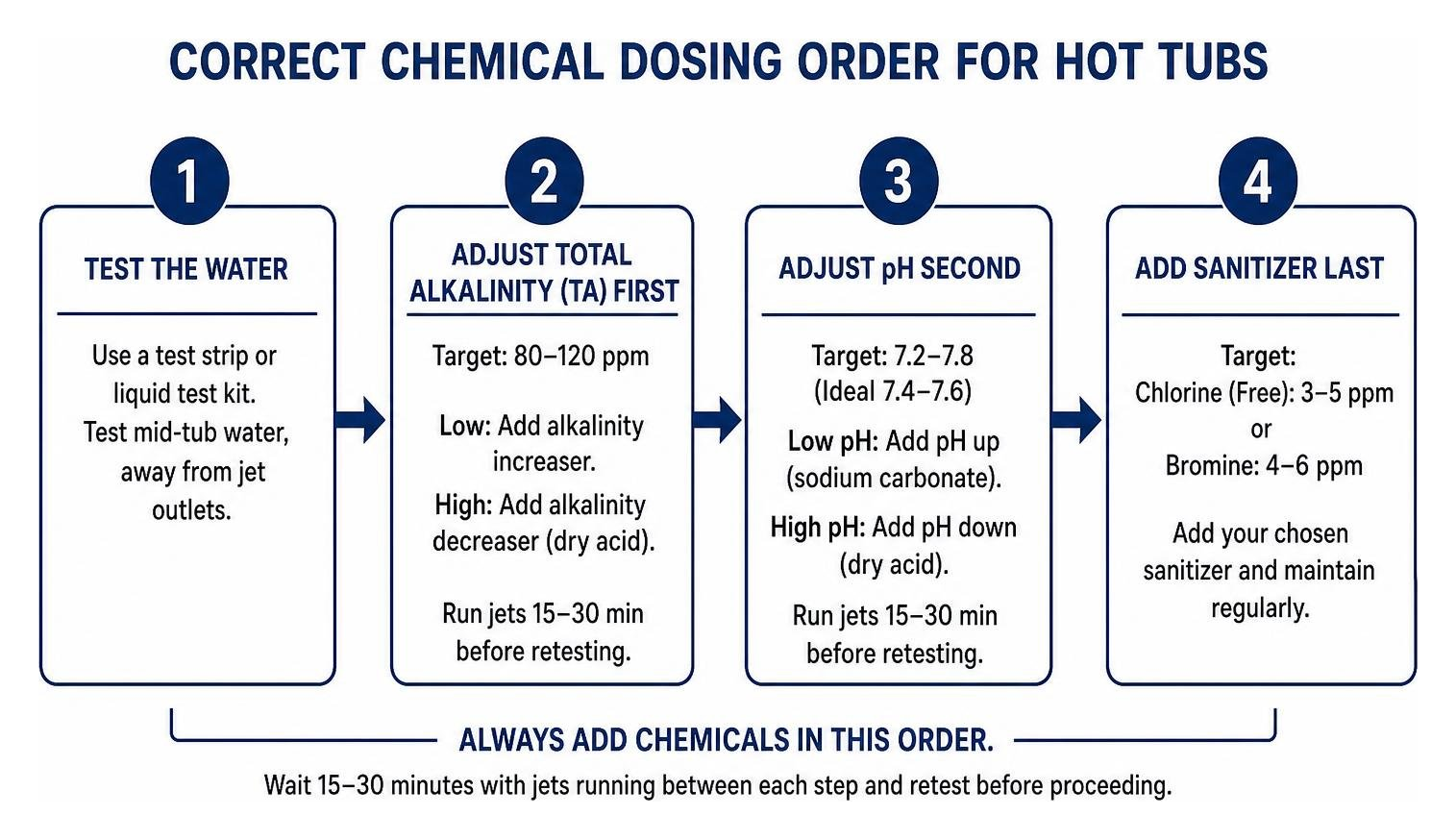
Always follow this exact four-step order whenever you fill or adjust your spa:
- Test the Water: Dip a fresh test strip 18 inches below the surface into mid-tub water, away from jet outlets. Read it in natural light within 10 seconds.
- Adjust Total Alkalinity First: Always balance TA before touching pH. If TA is low, add sodium bicarbonate (Alkalinity Increaser). If TA is high, add dry acid (pH/Alkalinity Decreaser). Run the circulation pump with the jets on low for 15 to 30 minutes before testing again.
- Adjust pH Second: Once TA is locked into the 80–120 ppm window, measure your pH. Use sodium carbonate (pH Up) to raise low pH, or dry acid (pH Down) to lower high pH.
- Adjust Calcium Hardness Third (if needed): If your source water is soft, add calcium chloride (Calcium Increaser) to bring levels up to 150–250 ppm.
- Add Sanitizer Last: Once TA, pH, and hardness are balanced, adjust your free chlorine (3–5 ppm) or bromine (4–6 ppm). Sanitizers perform with maximum efficiency only when pH is balanced first.
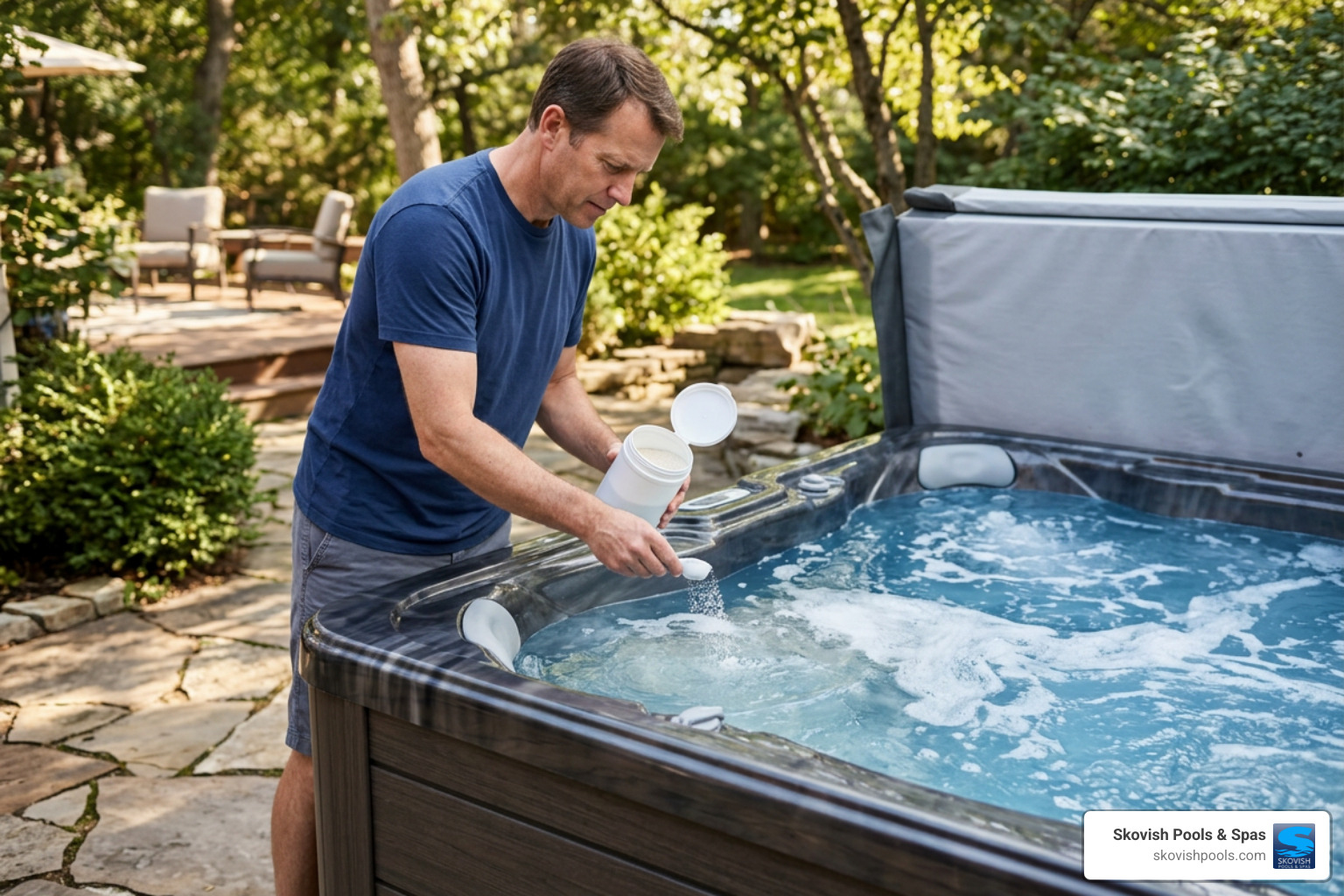
Pro-Tip: Always pre-dissolve dry chemical granules in a clean plastic bucket filled with warm spa water before pouring them into the tub. Never pour water into dry chemicals—always add dry chemicals to water to prevent splash-back. Keep the spa cover completely off and run circulation jets for 15 to 30 minutes after dosing to allow chemical gases to vent safely into the air.
Shock Treatment Protocols and Wait Times
“Shocking” your hot tub means adding an oxidizing agent to break up organic contaminants, destroy combined sanitizers (chloramines/bromamines), and clarify the water.
- Non-Chlorine Shock (Potassium Monopersulfate / MPS): Used for routine maintenance after soaks or once a week. MPS is a powerful oxidizer that does not raise chlorine levels. It burns off sweat, lotions, and oils without creating chemical smells. The best part? You only need to wait 15 to 20 minutes with the jets running and cover open before you can get back in the spa.
- Chlorine Shock (Sodium Dichlor): Used for initial start-up, severe contamination, algae blooms, or deep sanitization. Chlorine shock raises free chlorine rapidly (up to 8–10 ppm) to wipe out bacteria. Because chlorine levels are so high, you must wait until free chlorine drops back down to the safe 3–5 ppm range—which typically takes anywhere from 2 to 8 hours (or overnight).
Troubleshooting Common Spa Water Problems
Even with careful attention, every spa owner encounters water issues occasionally. Here is a quick reference guide to diagnose and resolve common problems:
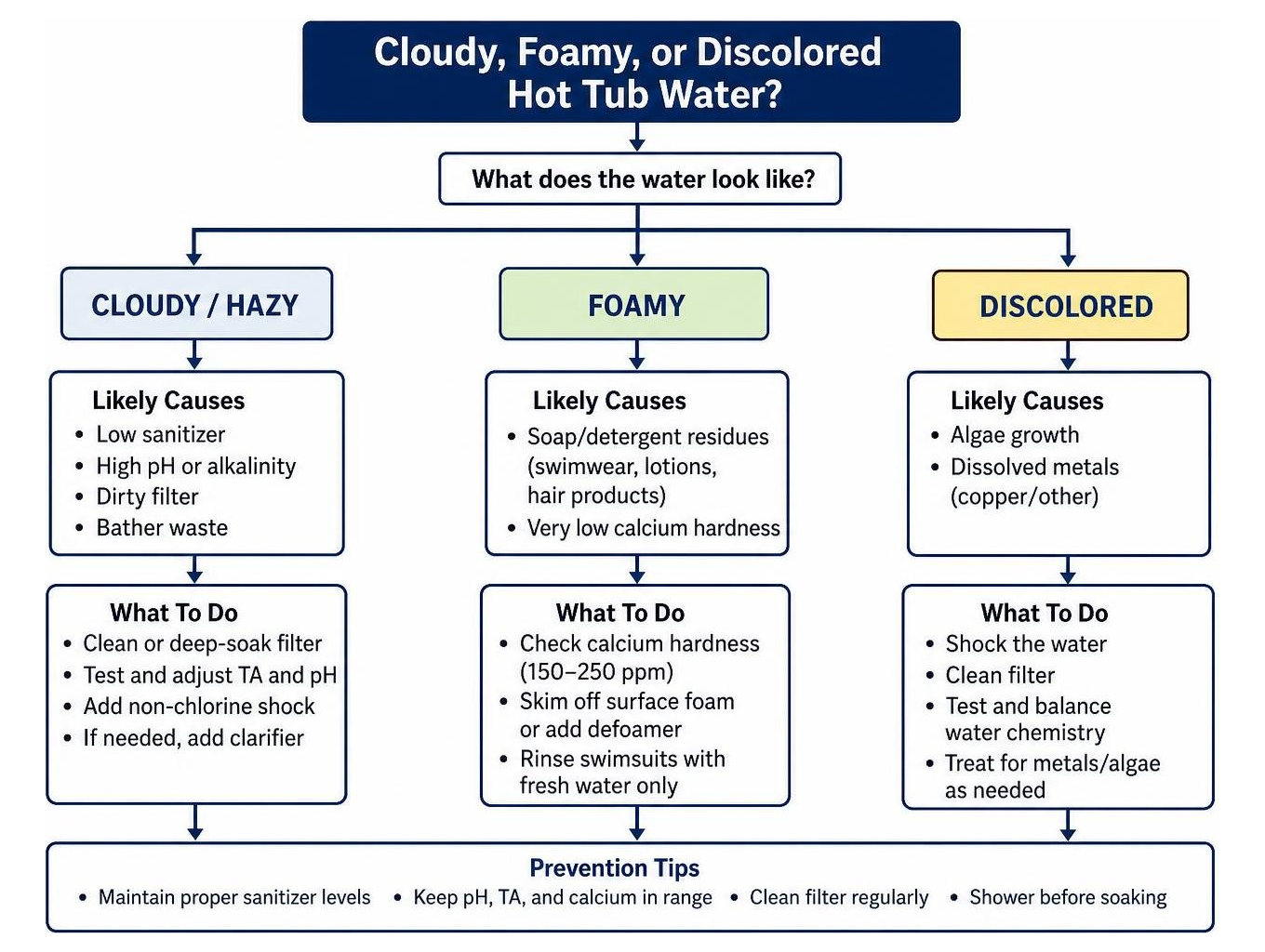
- Cloudy Water: Usually caused by low sanitizer levels, elevated pH/alkalinity, a dirty filter cartridge, or heavy bather waste.
- Fix: Rinse or deep-soak your filter cartridge, test and adjust TA and pH, and add a dose of non-chlorine shock. If water remains hazy, use a spa clarifier to group microscopic particles together for the filter to capture.
- Foamy Water: Caused by soap/detergent residues in swimwear, body lotions, hair products, or extremely low calcium hardness.
- Fix: Check calcium hardness first and bring it to 150–250 ppm. Skim off surface foam manually, or add a small drop of defoamer for quick temporary relief. Encourage guests to rinse swimsuits with fresh water only (no laundry detergent) before soaking.
- Green Water: Usually indicates algae growth or dissolved copper/metals from corroded equipment. Read our guide on Why Has My Hot Tub Water Turned Green for detailed removal steps.
- Skin or Eye Irritation: Caused by chloramine buildup or pH drifting below 7.2 or above 7.8.
- Fix: Shock the tub with MPS to burn off chloramines and balance pH to 7.4–7.6.
Frequently Asked Questions
How long should I wait after adding chemicals before using the hot tub?
For minor pH, alkalinity, or calcium adjustments, wait at least 20 to 30 minutes with the cover off and the jets running to ensure thorough mixing, then re-test the water. If you added non-chlorine shock (MPS), wait 15 to 20 minutes. If you performed a heavy chlorine shock, keep the cover off and wait until your test strip confirms free chlorine has dropped below 5 ppm (usually 2 to 8 hours).
How often should I drain and refill my hot tub?
As you add water balance chemicals over time, Total Dissolved Solids (TDS) accumulate in the water, making it feel “heavy” and resistant to chemical adjustments. Most residential hot tubs should be completely drained, flushed, and refilled every 3 to 4 months.
To calculate your personal drain schedule, use this standard industry formula:
$$\text{Days Between Draining} = \frac{\frac{1}{3} \times \text{Spa Capacity in Gallons}}{\text{Average Daily Bathers}}$$
For example, a 450-gallon hot tub used by 3 people daily should be drained every 50 days: $(150) / 3 = 50\text{ days}$.
Can I use swimming pool chemicals in my hot tub?
We strongly advise against using pool chemicals in a hot tub. Pool formulas are packaged in much higher concentrations designed for 20,000-gallon volumes, making precise dosing in a 400-gallon spa nearly impossible. Additionally, popular pool chlorine trichlor pucks are extremely acidic (pH ~2.8) and dissolve rapidly in warm water, which will erode your heater elements, void your manufacturer warranty, and rapidly build up excess Cyanuric Acid (CYA). Stick strictly to chemical products formulated specifically for hot tubs and spas.
Pure Water, Pure Relaxation with Skovish Pools & Spas
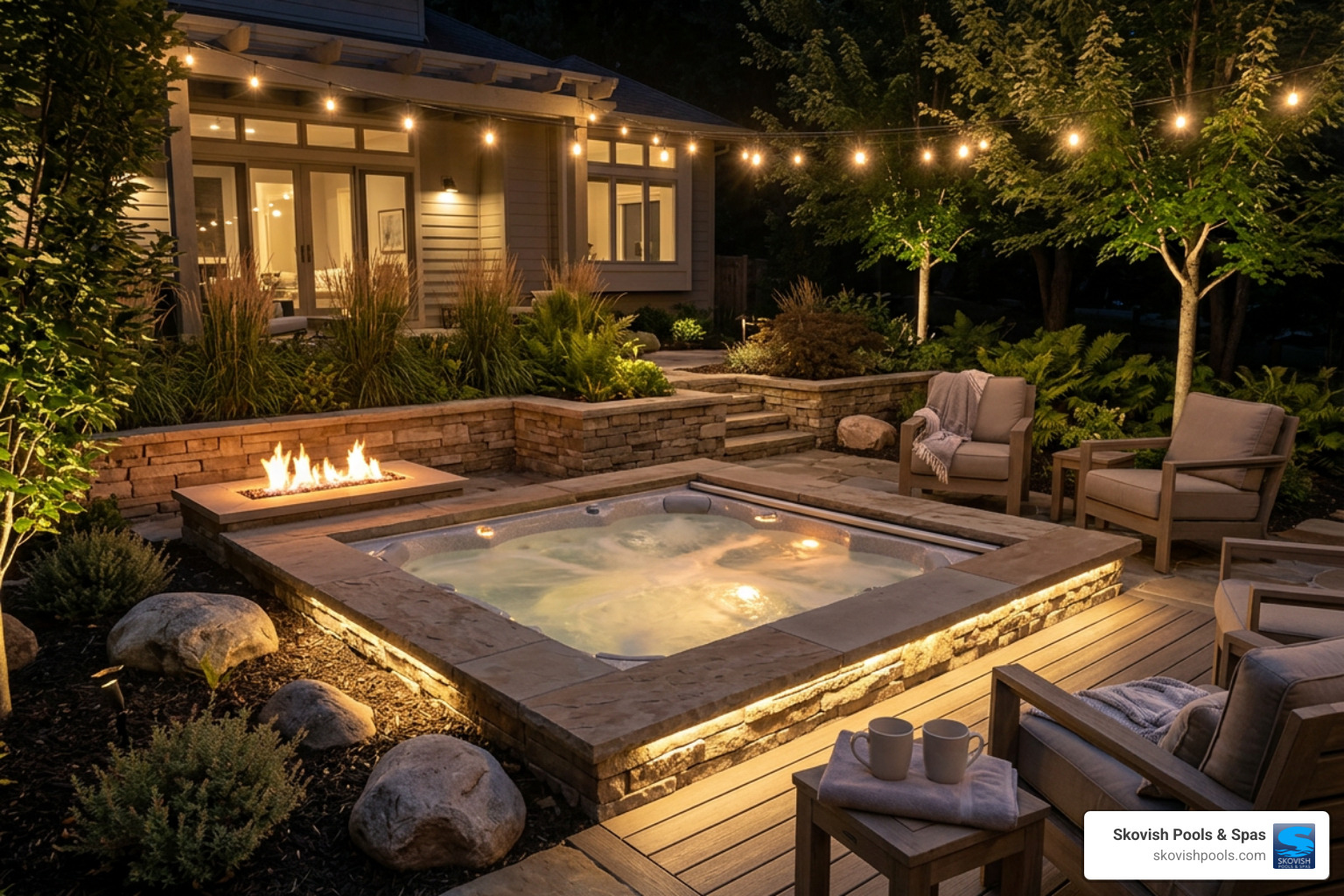
Mastering hot tub water chemistry isn’t about spending hours with test tubes—it’s about building a consistent, 5-minute daily and weekly habit. By keeping your total alkalinity buffered, your pH centered, and your sanitizer level steady, you safeguard your spa’s heating hardware while ensuring every soak is refreshing, clean, and safe.
At Skovish Pools & Spas, we’ve spent more than 50 years helping families throughout Luzerne County and Northeastern Pennsylvania design, install, and care for their dream pools and hot tubs. Whether you need professional water testing, spa maintenance supplies, or a fresh installation, our team in Luzerne and Shickshinny is here as your trusted partner.
Planning a new spa or upgrading your backyard retreat? Explore our complete hot tub installation and site preparation guide or stop by one of our local PA showrooms today—we’ll keep the water warm for you!


