

Fresh Ideas and Smart Steps for a Seamless Local Pool Remodel
Key Signs It Is Time for a Local Pool Remodel
A successful local pool remodel requires evaluating surface and equipment wear, selecting durable modern finishes, upgrading to energy-efficient mechanical systems, and planning project timelines during the off-season. While concrete and gunite shells can endure for decades, protective plaster finishes, waterline tile, and plumbing components eventually wear out. Recognizing when cosmetic blemishes cross into structural vulnerabilities is the essential first step in evaluating whether you should repair or replace your pool.
Identifying Structural and Surface Deterioration
Pool finishes serve as the waterproof barrier keeping water inside the vessel and away from the underlying concrete shell. When that finish breaks down, water penetrates the porous gunite, which can lead to expensive structural problems.
Key physical warning signs include:
- Rough, abrasive texture: As pool water chemistry gradually pulls calcium from standard plaster over 7 to 12 years, the surface becomes pitted and rough enough to scrape bare feet.
- Delamination and peeling: Large areas of plaster separating or popping off the shell indicate that the bond between the finish coat and gunite has failed.
- Persistent staining and calcification: Deep mineral stains that resist acid washing or heavy scaling along the waterline signal that the surface is worn down and porous.
- Shell cracking and water loss: Fine surface craze cracks are common, but cracks extending through the gunite shell or causing noticeable water loss demand immediate structural attention.
Outdated Equipment and Rising Operational Costs
An aging equipment pad often costs more to maintain through piecemeal service calls than replacing it with modern technology. Single-speed filtration pumps run at continuous high wattage, significantly raising monthly electric bills.
Failing mechanical systems also show up as persistent pressure loss, leaking plumbing unions, failing filter grids, and inefficient pool heaters that struggle to maintain temperature. If your filtration system is more than 10 to 12 years old, modernizing your mechanical pad during a renovation delivers immediate energy savings and eliminates recurring repair bills.
Inspiring Upgrades and High-Impact Features
Remodeling is your opportunity to rethink how your family interacts with your outdoor living space. Exploring creative backyard pool renovation ideas and choosing the top pool upgrade ideas for modern backyards can transform an ordinary rectangular basin into a resort-style retreat.
Luxury Additions: Tanning Ledges, Spas, and Water Features
Adding shallow-water lounge spaces and dynamic water elements can completely modernize older pools:
- Tanning ledges (Baja shelves): A shallow 8-to-10-inch deep shelf creates a dedicated spot for in-water lounge chairs, bubbler jets, and umbrella sleeves—making it a favorite for both young children and adults lounging in the sun.
- Attached spas and spillover hot tubs: Incorporating a custom raised spa with hydrotherapy jets and a stone spillway extends your swimming season into early spring and late autumn.
- Dynamic water features: Installing sheer descent waterfalls, laminar deck jets, rain curtains, or illuminated scuppers adds visual appeal and relaxing ambient sound that helps mask neighborhood noise.
Interior Finishes: Resurfacing, Replastering, and Refinishing
Homeowners often ask about the differences between resurfacing, replastering, and refinishing:
- Refinishing is the general umbrella term for restoring a pool’s interior surface.
- Resurfacing describes the process of preparing the substrate and applying a new protective topcoat.
- Replastering specifically refers to applying a traditional smooth white cement and marble dust mixture.
Selecting the right interior material depends on your aesthetic preferences, budget, and desired longevity:
| Finish Type | Average Lifespan | Texture & Feel | Stain & Chemical Resistance | Relative Cost |
|---|---|---|---|---|
| Standard White Plaster | 7–12 Years | Silky smooth | Moderate; sensitive to chemical shifts | Baseline ($) |
| Quartz Aggregate Blends | 10–15 Years | Smooth with light texture | High; blended ceramic quartz resists etching | Moderate ($$) |
| Pebble / Aggregate Surfaces | 15–25+ Years | Textured, natural river pebble | Superior; highly resistant to algae and wear | Premium ($$$) |
Modern Coping, Waterline Tile, and Decking
Coping forms the critical transition between the pool vessel and your surrounding patio. Outdated brick or cracked precast concrete can be replaced with slip-resistant natural stone, bullnose travertine pavers, or modern cantilevered poured concrete.
Pairing updated coping with frost-proof porcelain or glass mosaic waterline tile creates a watertight seal at the deck joint. Upgrading worn concrete pool decks to textured, cool-touch pavers enhances both safety and freeze-thaw durability across changing seasonal conditions.
Smart Project Planning: Budget, Timelines, and Efficiency
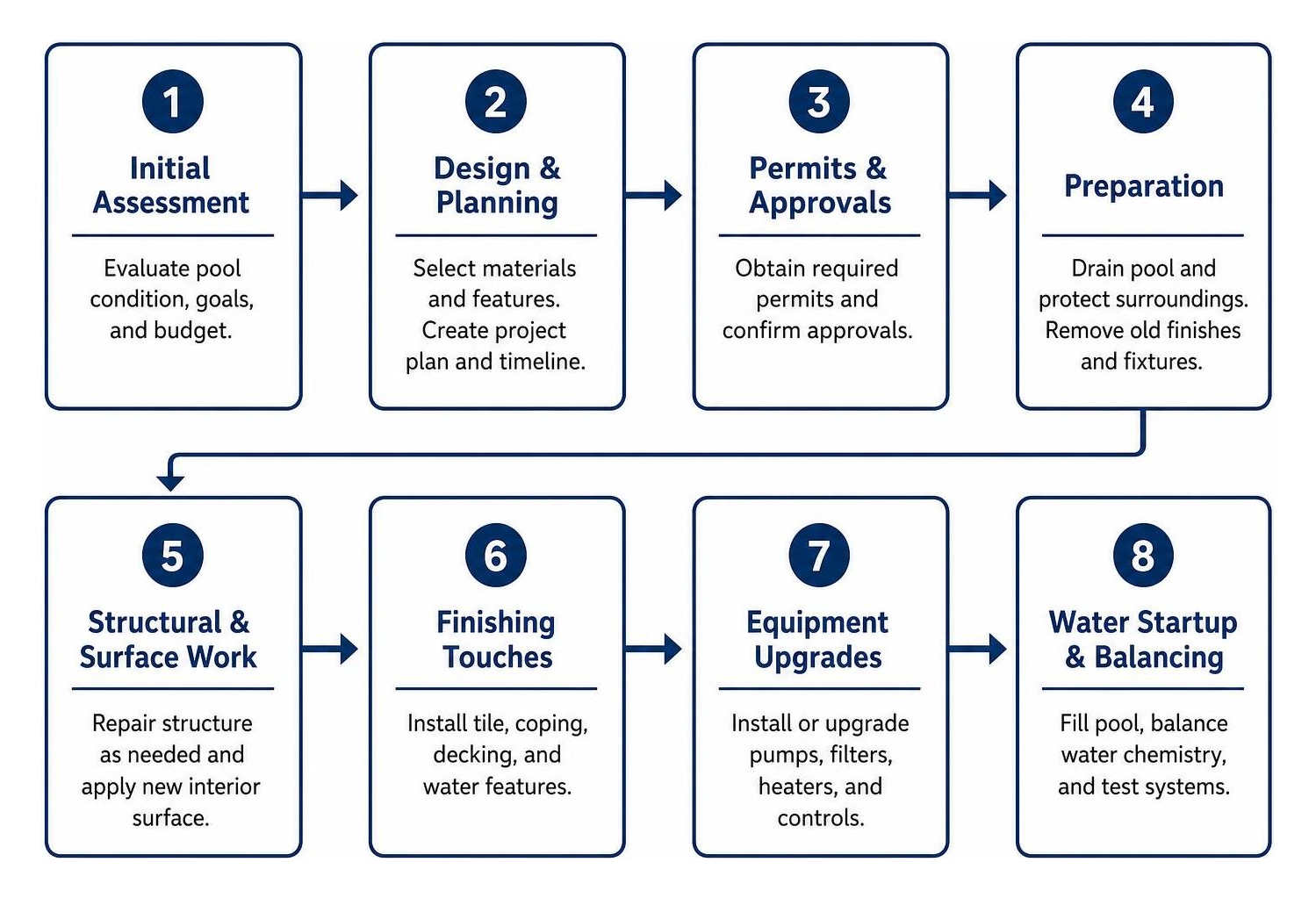
A smooth renovation depends on establishing realistic financial expectations, planning for weather-related lead times, and mastering the basics of a great pool remodel.
Budgeting and Cost Factors for a Local Pool Remodel
Nationwide, basic pool resurfacing runs between $6,000 and $15,000, while a comprehensive remodel involving new tile, coping, decking, and equipment upgrades averages $15,000 to $50,000+. Complete backyard transformations featuring custom spas, extensive hardscaping, and structural redesigns can range from $30,000 to over $100,000.
Key cost factors include:
- Pool dimensions and interior surface area
- Material selections (standard white plaster vs. aggregate pebble finishes)
- Decking square footage (paver overlays vs. complete concrete demolition)
- Equipment scope (basic pump replacements vs. full smart automation overhauls)
- Site access and structural engineering requirements
Managing Timelines During a Local Pool Remodel
Project timelines vary depending on complexity, municipal permitting, and weather conditions:
- Basic interior resurfacing: Typically completes in 1 to 2 weeks (including 5 to 7 days of plaster application and curing).
- Partial remodel (tile, coping, lighting): Averages 2 to 4 weeks.
- Complete structural and deck renovation: Runs 4 to 8 weeks on average.
After applying a new interior plaster or pebble finish and refilling the pool, a multi-visit startup protocol is essential. Technicians must brush the surface daily, clear plaster dust from filtration grids, and gradually balance water chemistry over the first 28 to 30 days to protect the finish warranty.
Energy-Efficient and Eco-Friendly Modernization
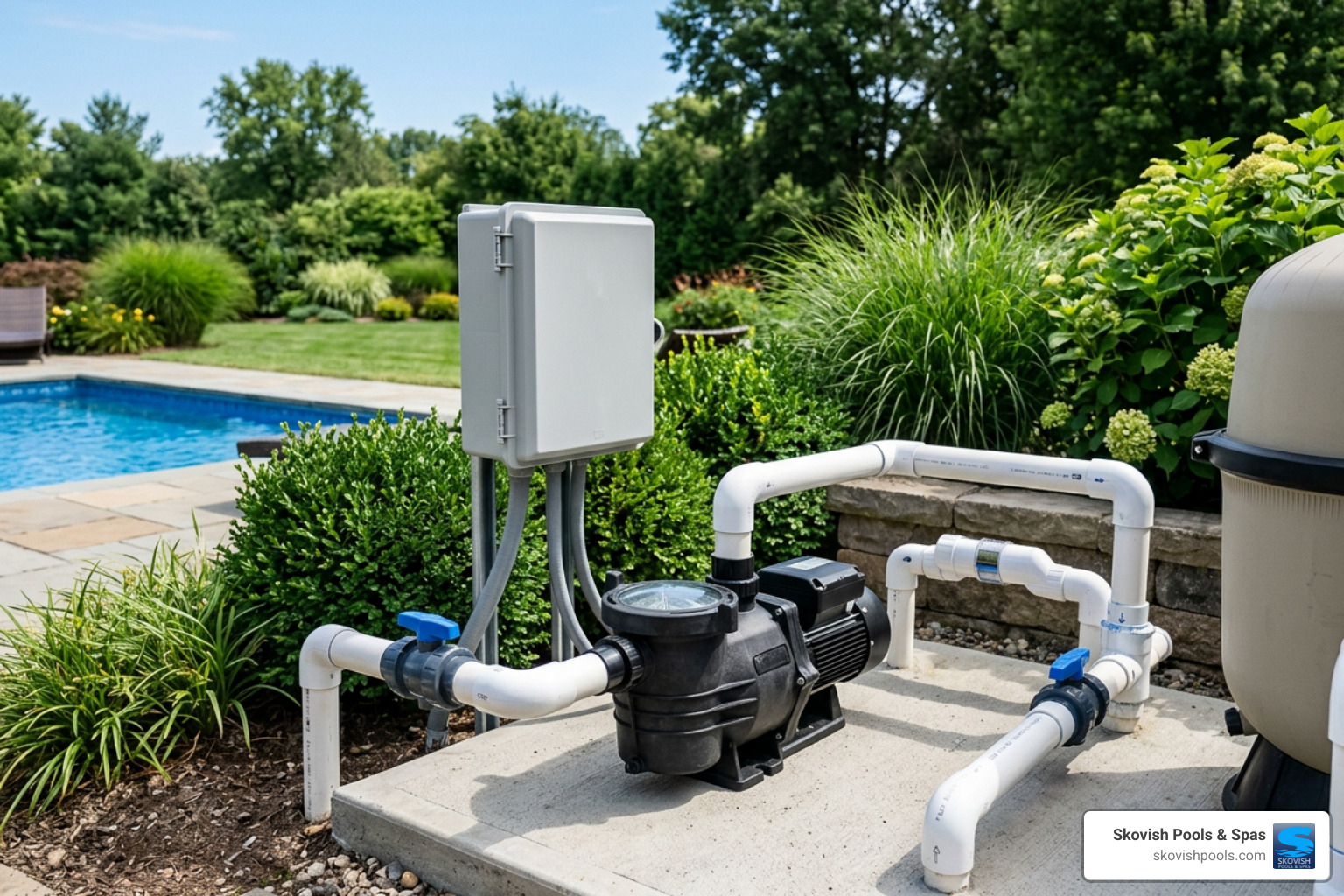
Modernizing your pool pad with energy-efficient equipment lowers operating costs while reducing environmental impact:
- Variable-speed pumps: Modern variable-speed pumps from Hayward Pool Products consume significantly less energy than outdated single-speed motors by running at lower, whisper-quiet RPMs throughout the day.
- Color-changing LED lighting: The U.S. Department of Energy reports that residential LEDs use at least 75% less energy and last up to 25 times longer than traditional incandescent pool bulbs.
- Smart pool automation: Automated controllers allow homeowners to schedule filtration, adjust heating, and monitor sanitation levels directly from a smartphone.
- High-efficiency heat pumps: Electric heat pumps efficiently transfer ambient heat into your water, extending comfortable swimming well into the shoulder seasons.
Navigating the Renovation Process and Hiring Professionals
A pool remodel is a complex construction project involving plumbing, masonry, electrical systems, and chemical balancing. Choosing expert pool remodeling services and keeping in mind key factors to consider when building or remodeling a pool ensures your project stays on schedule and complies with local building codes.
Phased Upgrades vs. All-at-Once Renovation
While phasing a remodel across several seasons can help with initial cash flow, bundling major renovations into a single project is almost always more cost-effective.
Draining a pool involves fixed mobilization costs, chemical startup expenses, and site prep. Completing waterline tile, coping, lighting conduits, and interior resurfacing during the same drainage window prevents paying double for draining, cleaning, and water refills down the road.
If you must phase the work, prioritize below-the-waterline structural fixes and resurfacing first, followed by equipment pad upgrades, and leave surrounding landscape and patio additions for later stages.
Choosing a Qualified Local Contractor
When evaluating contractors for your project, look for these key qualifications:
- Licensing, bonding, and adequate liability insurance
- Direct experience with local climate conditions and freeze-thaw cycles
- Detailed, itemized estimates that clearly outline demolition, surface prep, materials, and startup procedures without hidden exclusions
- In-house 3D design software to help visualize layouts, finishes, and features before demolition begins
- A proven post-construction startup and service process to properly cure finishes and balance water chemistry
Frequently Asked Questions About Swimming Pool Renovations
Does a pool remodel increase home value?
Yes. An updated pool with modern pebble surfaces, clean hardscaping, and energy-efficient equipment improves overall property appeal and eliminates the buyer hesitation that often comes with aged, deteriorating pools. Replacing outdated plaster and equipment helps maintain market value and ensures the backyard remains a genuine selling point.
Do I need permits for a pool remodel, and who handles them?
Cosmetic repairs—such as swapping a few broken waterline tiles—rarely require permits. However, major renovations involving electrical rewiring, gas line alterations for heaters, structural shell modifications, or barrier/fencing adjustments require municipal building permits. A reputable local contractor will prepare engineering drawings and handle the permit application and inspection process on your behalf.
What is the best time of year to remodel a pool?
Planning during the off-season is the most effective approach. Homeowners who focus on identifying the best time for pool remodeling and construction typically schedule projects for late autumn, winter, or early spring. This allows you to take advantage of faster contractor scheduling and ensure all construction, curing, and landscaping wrap up in time for a hassle-free summer opening.
Bringing Your Backyard Vision to Life
A well-planned swimming pool renovation revitalizes your outdoor living area, lowers monthly utility bills, and provides a durable recreation space for family and friends. Addressing structural needs early and choosing materials suited to regional climate demands ensures your investment will perform reliably for decades.
At Skovish Pools & Spas, our family-owned team brings over 50 years of Pennsylvania craftsmanship to custom pool construction, renovations, and ongoing water care across Luzerne County and surrounding areas. To explore design ideas and plan your upcoming renovation, schedule a consultation with Skovish Pools & Spas today.


