

Start Your Pool Season Right with This Easy Spring Startup Routine
Open a Pool After Winter With a Simple, Safe Routine
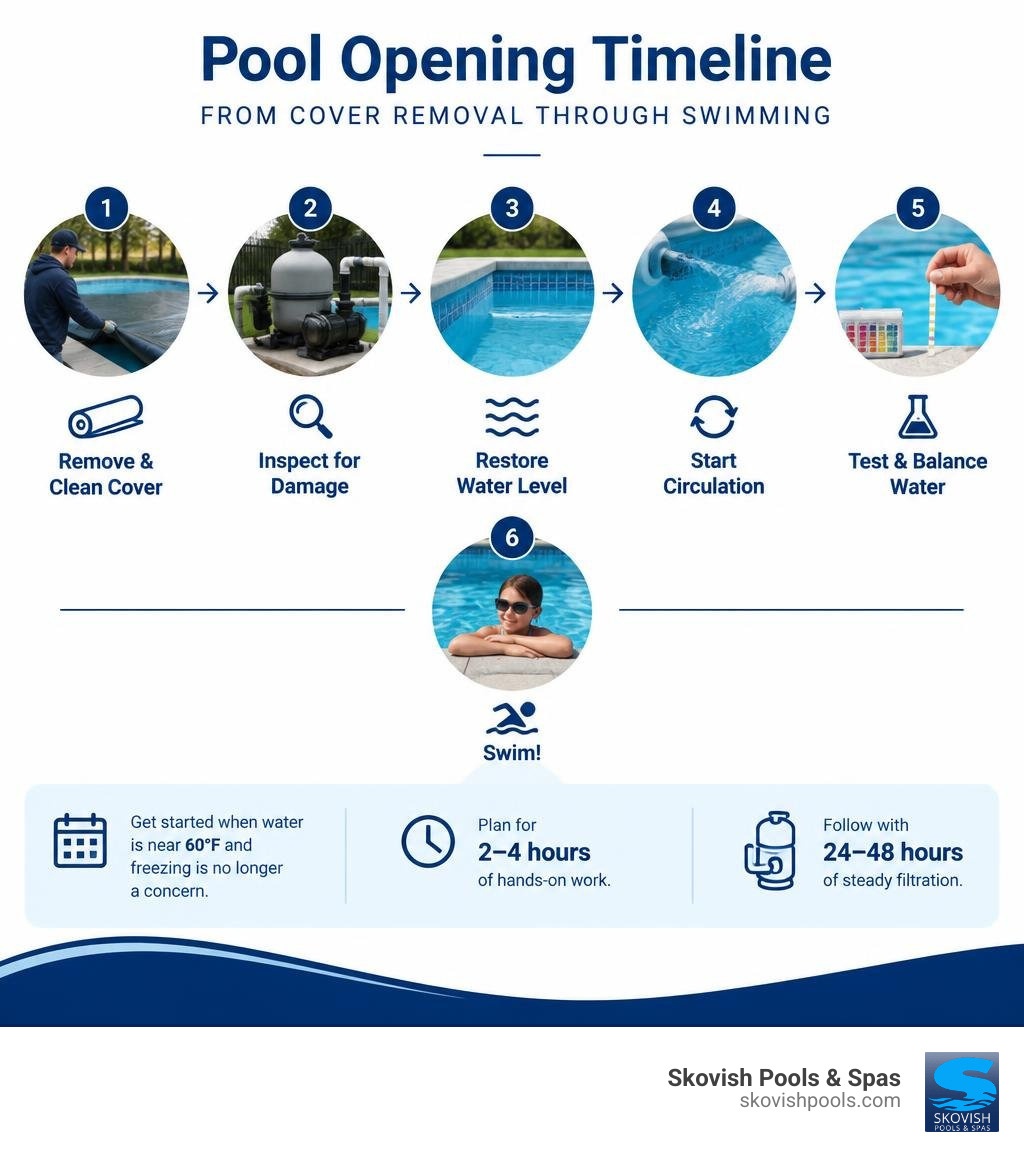
To open a pool after winter, start when water is consistently near 60 F and overnight freezing is no longer a concern. Remove and clean the cover, inspect the pool and equipment for winter damage, restore the water level, start circulation carefully, then test and balance the water before shocking if needed.
A proper opening usually takes 2 to 4 hours of hands-on work, followed by 24 to 48 hours of steady filtration. Opening before warm weather takes hold can also limit algae growth, helping you spend less time clearing cloudy or green water later.
I am Marty Skovish, Senior Manager at Skovish Pools & Spas, with more than four decades of experience helping Northeastern Pennsylvania homeowners open a pool after winter. In the steps ahead, I will show you how to start the season safely, spot problems early, and get back to clear, swim-ready water.
Optimal Timing to Open a Pool After Winter
Knowing when to begin is half the battle. If you wait too long into the season, warming temperatures under a dark winter cover create the ideal breeding ground for algae. Conversely, opening during lingering hard freezes can risk freezing water in uninsulated plumbing lines.
For pool owners across our region, finding the best time to open your pool in PA typically means targeting mid-to-late April. At this point, daytime temperatures consistently reach 65°F to 70°F, while overnight lows stay reliably above freezing.
When you follow a structured guide on how to open your pool for summer, you prevent the nightmare of peeling back your cover to find a dark green swamp. Opening earlier rather than later saves substantial time and money on sanitizing chemicals.
Temperature Benchmarks to Open a Pool After Winter Without Algae
The golden rule of spring startup centers on water temperature: you want to start circulation before the water climbs above 60°F. Below 60°F, dormant algae spores reproduce very slowly. Once the water warms beyond that mark, algae growth accelerates rapidly.
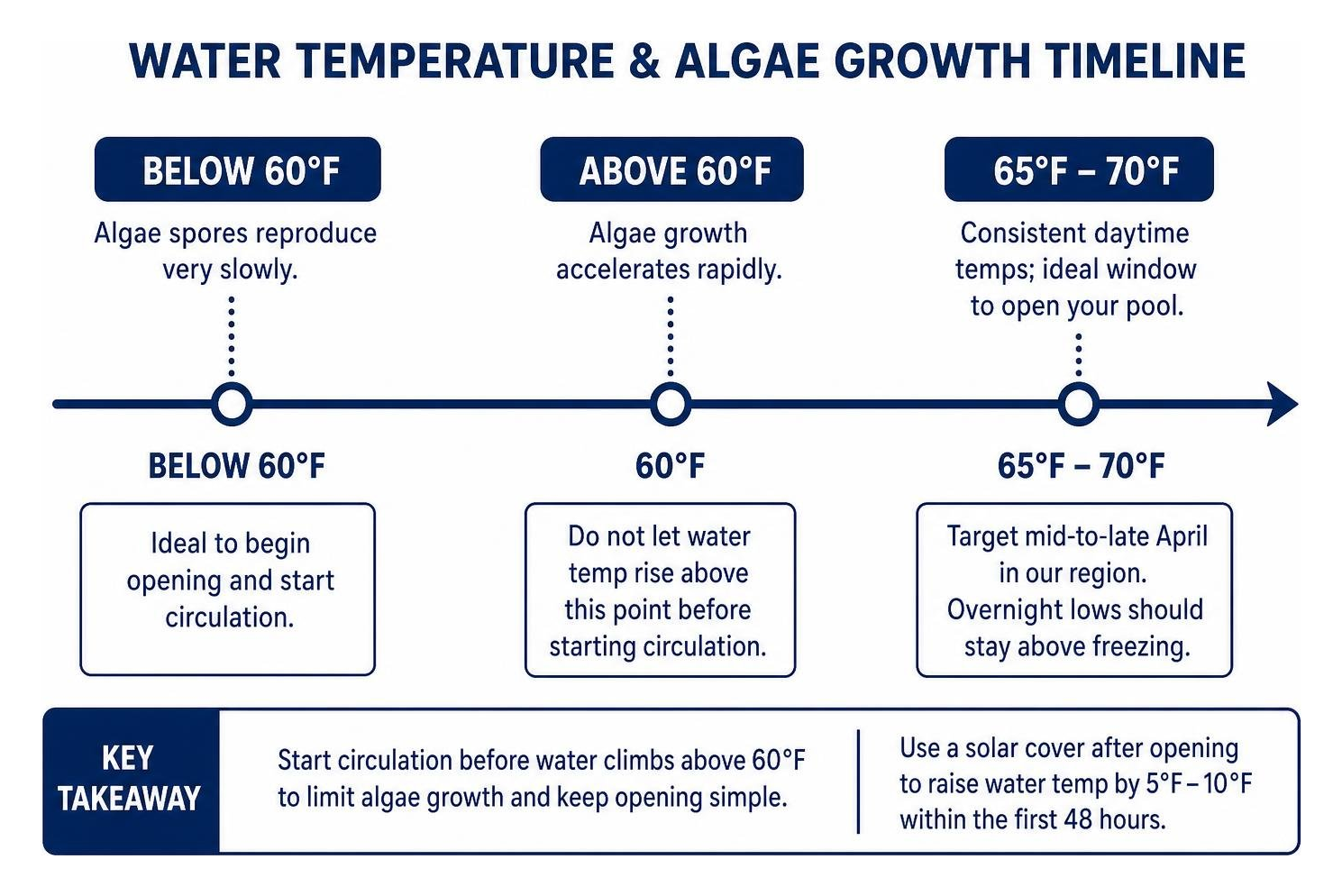
If you plan to use an energy-efficient heat pump to extend your early season swimming, starting the system while ambient air is 50°F to 60°F allows you to balance the water before activating the heating cycle. Using a solar cover after opening can raise the water temperature by 5°F to 10°F within the first 48 hours while locking in heat overnight.
Essential Tools, Chemicals, and Equipment Preparation
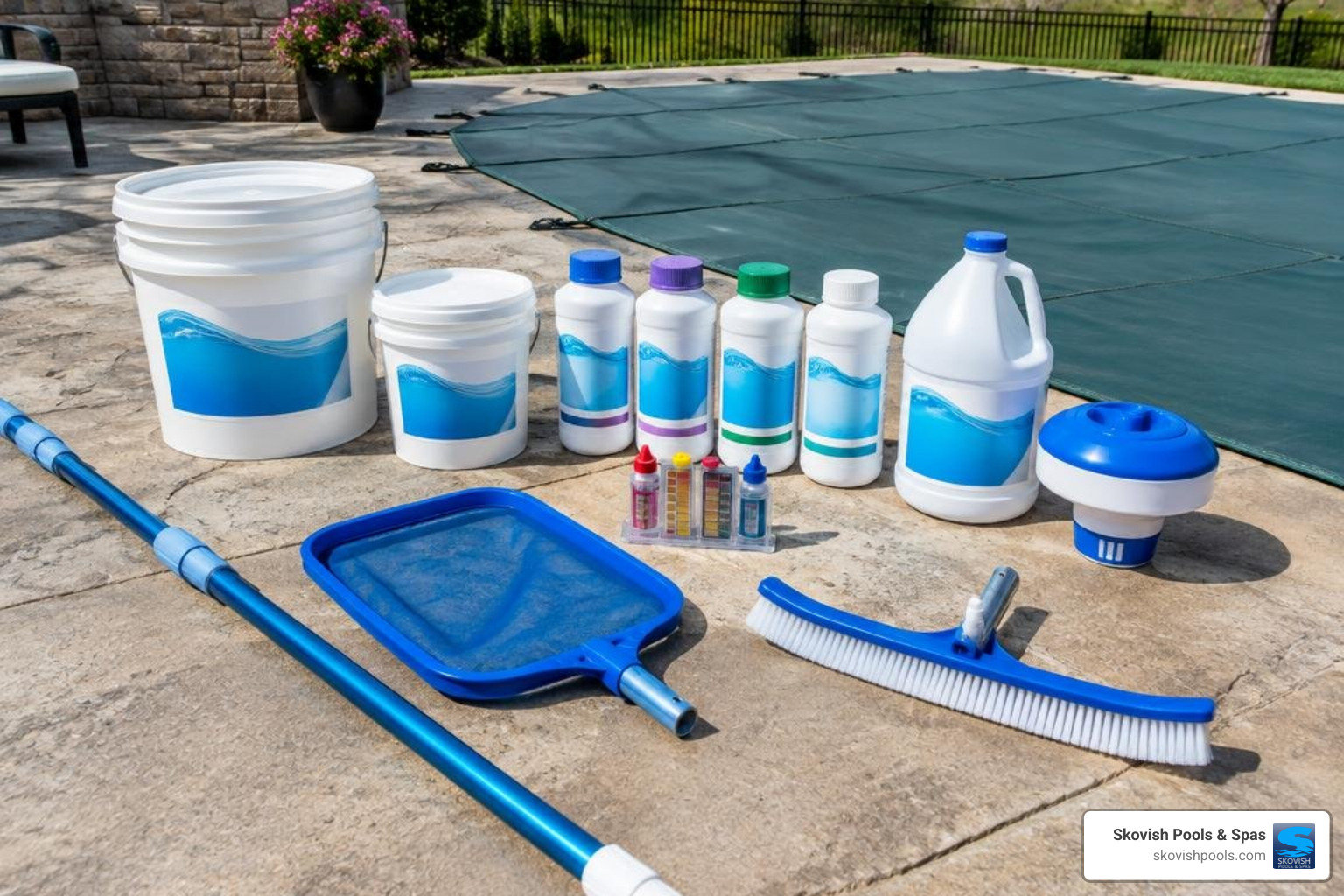
Gathering everything before you start saves multiple trips to our stores in Luzerne or Shickshinny. Here is what you should have on hand:
- Tools & Safety Gear: Telescopic pole, skimmer net, heavy-duty wall brush, manual or robotic vacuum, submersible cover pump, silicone-based pool lubricant, and Teflon tape.
- Water Chemistry: Test strips or a liquid test kit, sodium bicarbonate (alkalinity increaser), muriatic acid or sodium bisulfate (pH decreaser), soda ash (pH increaser), calcium hardness increaser, cyanuric acid (stabilizer), and liquid chlorine or calcium hypochlorite shock.
- Phosphate & Metal Treatments: A phosphate remover or broad-spectrum stripper to clear spring contaminants.
For a comprehensive list of quantities based on pool volume, review our pool opening chemicals checklist.
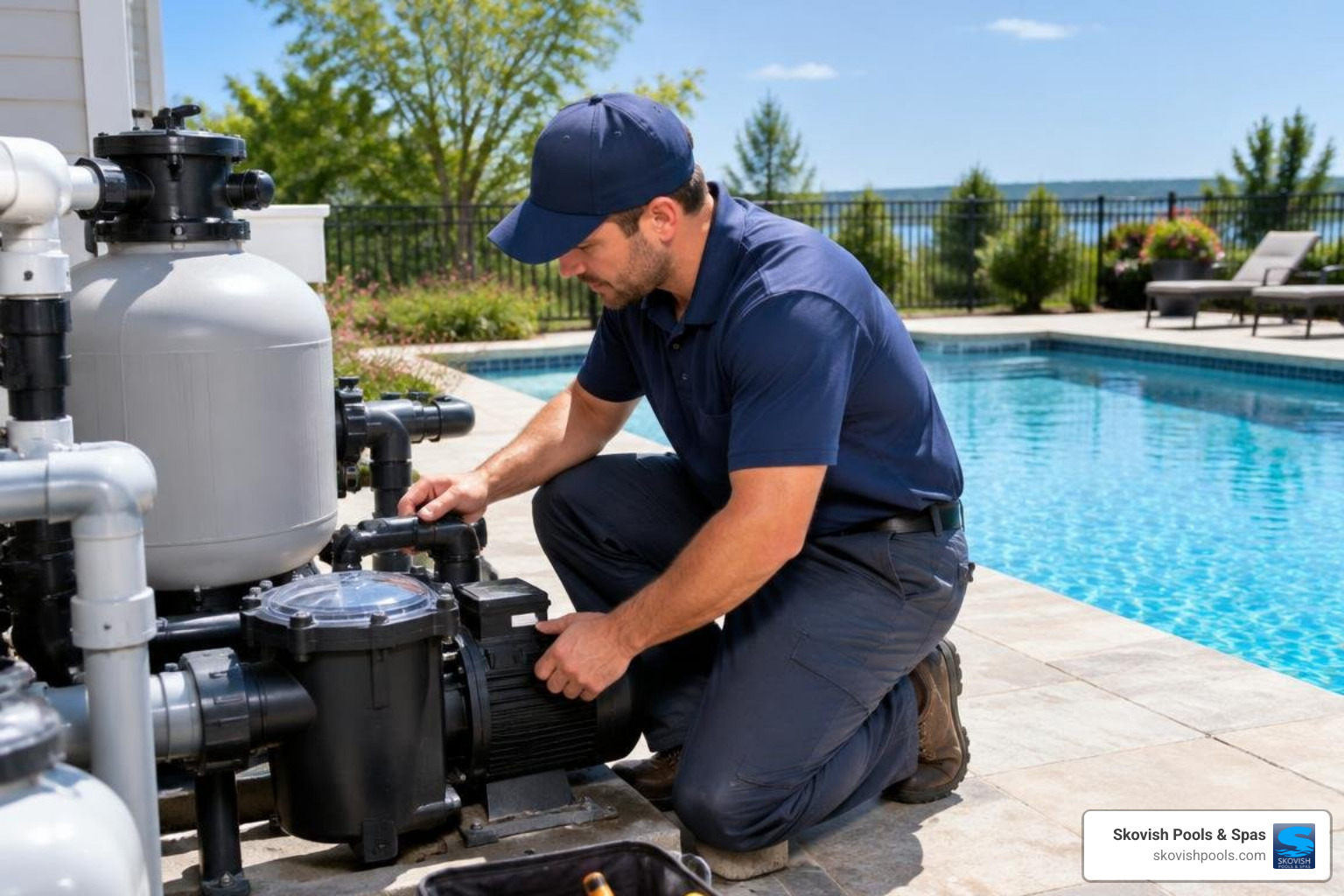
Pre-Opening Equipment Inspection and Safe Startup
Before switching on power at the breaker panel, a thorough visual inspection is critical. Freezing winter conditions can expand residual moisture, leading to hairline fractures in plastics and metals.
- Inspect the Pad: Check your pump housing, filter tank, multiport valve, and heater manifold for visible cracks.
- Examine Seals: Inspect all O-rings—especially on the pump lid and drain plugs. Replace any that appear cracked, flattened, or brittle, and apply a fresh layer of silicone-based pool lubricant.
- Reinstall Drain Plugs: Reinstall the winter drain plugs on the pump strainer basket, filter tank, and heater using Teflon tape on threaded plastic fittings.
- Prime and Monitor: Fill the pump basket with water, seal the lid, open all suction and return valves, and turn on the system. Watch the pressure gauge closely. Baseline pressure should sit between 8 and 15 psi depending on your setup. A sudden spike of 8 to 10 psi above clean running pressure signals a dirty filter element or plumbing blockage.
If you notice unusual vibrations, leaks, or electrical hums, addressing these pool equipment problems after winter immediately prevents costly motor burnout.
Saltwater System Checks When You Open a Pool After Winter
If you operate a saltwater pool, your startup routine requires an extra step. Salt chlorinator electrolytic cells cannot generate chlorine efficiently when water temperatures sit below 50°F to 60°F, and running them in cold water can damage the cell plates.
Remove the salt cell and inspect the internal plates for white, flaky calcium scale. If scale is present, soak the cell in a mild acid solution according to manufacturer guidelines. Keep the salt generator turned off during initial water circulation. Once water temperatures consistently stay above 60°F and you have added pool-grade salt to achieve 2,700 to 3,400 ppm (or your system’s recommended target), activate the chlorinator.
Step-by-Step Guide to Opening and Restoring Your Pool
Opening your pool is a straightforward, methodical process. By following our 13 easy steps to open your pool, you ensure no safety or mechanical detail gets overlooked. Modern industry standards emphasize physical debris management and water circulation before chemical application.
Removing and Storing the Winter Cover
Your winter cover protects the pool all season, but removing it improperly can dump gallons of dirty, stagnant water right into your clean pool.
- Pump Off Standing Water: Place a submersible cover pump on the cover to remove collected rainwater and melted snow.
- Clear Large Debris: Use a leaf net or a soft leaf blower to clear twigs and leaves from the top before unhooking the straps or water bags.
- Remove Carefully: With a helper on the opposite side, fold the cover accordion-style as you pull it onto the deck.
- Clean and Dry: Spread the cover on the lawn or driveway, scrub it with a mild pool cover cleaner, hose it down thoroughly, and allow it to dry completely. Storing a damp cover leads to mold, mildew, and fabric deterioration.
Physical Cleaning and Water Circulation
With the cover stowed, remove all winterizing freeze plugs from the skimmers and return jets, and reinstall your skimmer baskets and eyeball fittings.
- Top Off Water: Fill the pool until the water level reaches the midpoint of the skimmer opening. Running a pump with water below the skimmer draws air into the lines and risks losing prime.
- Remove Settled Debris: Skim surface leaves, brush the walls down to the main drain, and vacuum settled dirt. Performing physical cleaning first reduces the organic load, ensuring your sanitizer targets microscopic bacteria rather than rotting leaves.
- Start Forced Filtration: Start the pump and let it run continuously for 24 to 48 hours. Continuous circulation mixes old and new water thoroughly, preparing it for accurate testing. You can learn more about how to prepare your pool for spring in our detailed guide on how to prepare your pool in the spring.
Proper Order for Balancing Water Chemistry
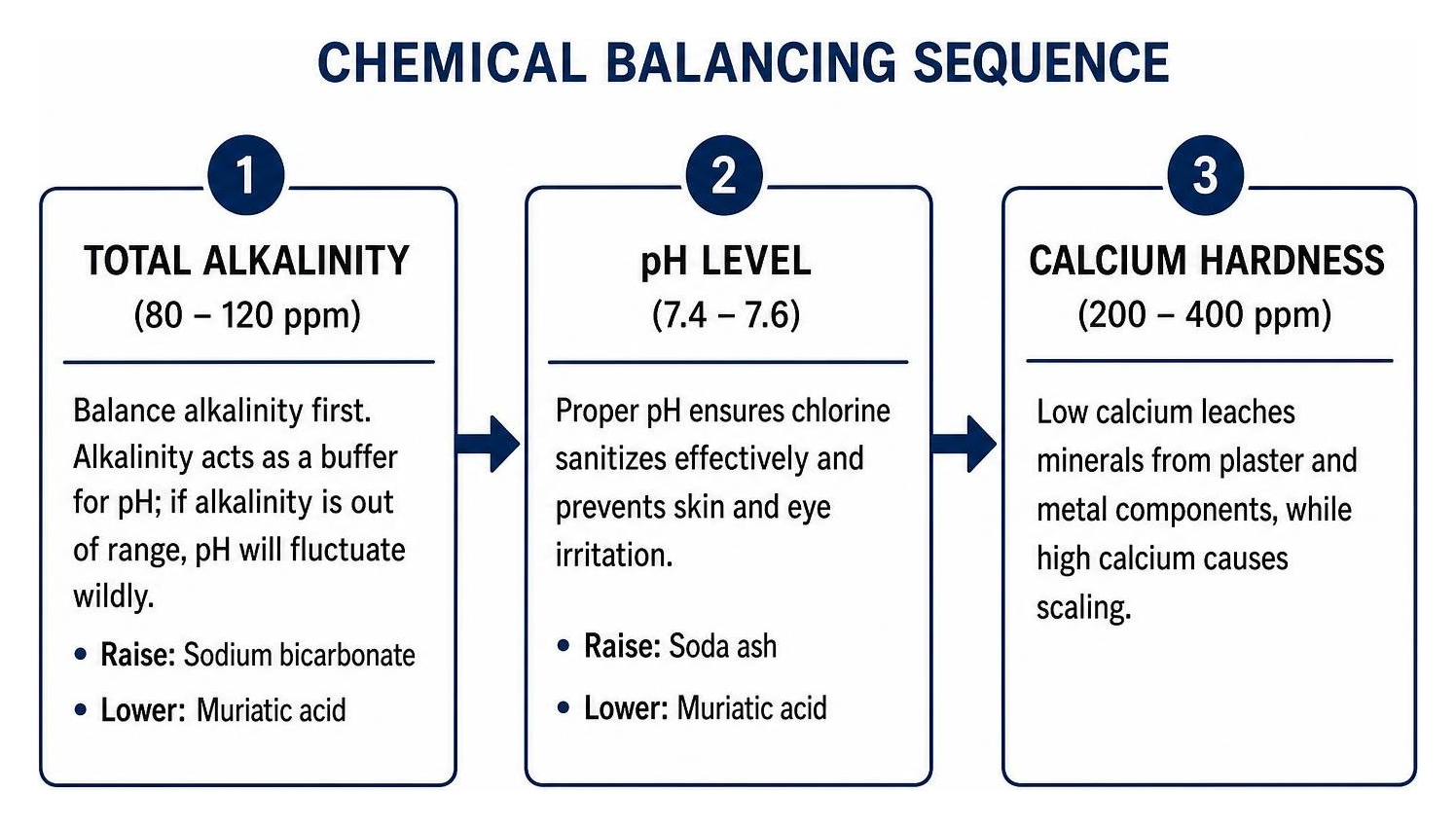
Never add all your opening chemicals at once. Adding products out of sequence can cause cloudiness, scaling, or neutralized sanitizers. Refer to our pool opening Northeast PA guide to tailor adjustments to local water mineral profiles.
Follow this precise sequence:
- Total Alkalinity (80 – 120 ppm): Balance alkalinity first. Alkalinity acts as a buffer for pH; if alkalinity is out of range, pH will fluctuate wildly. Use sodium bicarbonate to raise it or muriatic acid to lower it.
- pH Level (7.4 – 7.6): Proper pH ensures chlorine sanitizes effectively and prevents skin and eye irritation. Adjust with soda ash (to raise) or muriatic acid (to lower).
- Calcium Hardness (200 – 400 ppm): Low calcium leaches minerals from plaster and metal components, while high calcium causes scaling.
- Cyanuric Acid (30 – 50 ppm): CYA acts as sunscreen for free chlorine. Without adequate stabilizer, sunlight degrades free chlorine in a matter of hours.
- Phosphate Stripping: Spring water often tests between 500 and 2,000+ ppb of phosphates due to decaying winter matter. Stripping phosphates below 100 ppb starves algae of its primary food source.
- Shock Treatment: Once pH and alkalinity are set, shock the pool with 1 to 2 lbs of calcium hypochlorite per 10,000 gallons (or 3 lbs per 10,000 gallons for hazy water). Always add shock at dusk so ultraviolet rays do not dissipate the chlorine before it oxidizes contaminants.
Clearing Green or Cloudy Water After Opening
If you uncover a green pool, stay calm. A pool that opens green usually takes 3 to 7 days of persistent care to recover.
| Water Condition | Shock Dosage (per 10k gal) | Daily Filtration Time | Expected Recovery Time | Primary Action Required |
|---|---|---|---|---|
| Clear Water | 1 lb Cal-Hypo | 24 hours initial | 24 – 48 hours | Standard balance, circulate, routine maintenance |
| Hazy / Cloudy | 2 lbs Cal-Hypo | 24 – 48 hours continuous | 2 – 4 days | Balance pH to 7.2, shock at dusk, backwash daily |
| Green / Swampy | 3 – 4 lbs Cal-Hypo | 48 – 72+ hours continuous | 5 – 10 days | Triple-shock, brush 2x daily, vacuum to waste |
When tackling green water, brush the pool surfaces twice daily to disrupt the protective algae biofilm. If debris is thick, vacuum directly to “Waste” rather than running it through your filter media. For severe algae blooms, follow our targeted protocol for clearing green pool water after winter.
Spring Maintenance and Valuable Upgrades
Opening your pool presents an ideal window to inspect structural and aesthetic components before full-time summer use begins.
Consider these strategic upgrades while the water is cool and equipment is being serviced:
- LED Lighting Retrofits: Upgrading aging halogen fixtures to modern LED lighting systems cuts energy consumption by up to 75% and provides vivid color displays for evening swims.
- Safety Handrails and Ladders: Winter salt and freeze cycles corrode traditional metal rails. Replacing pitted metal with modern composite or high-grade stainless steel safety rails eliminates rust stains and enhances swimmer safety.
- Automated Water Levelers: Installing an auto-fill system protects your pump motor from running dry if water evaporates during mid-summer heatwaves.
- Waterline Tile Care: Inspect the waterline for calcium buildup or loose tiles. Repairing grout lines now prevents water from seeping behind tiles and freezing next winter.
For more helpful advice on optimizing your setup, explore these important pool opening tips to know.
Frequently Asked Questions About Pool Opening
How long after shocking the pool during opening can you swim?
You can safely swim once free available chlorine levels drop back into the 1.0 to 3.0 ppm range and the water is completely clear, with the bottom drain visible. After a heavy spring opening shock, this typically takes 24 to 48 hours of continuous filtration. Always test the water before jumping in.
Can I open my pool myself or should I hire a professional?
Opening a pool yourself generally costs between $50 and $150 in startup chemicals and takes 2 to 4 hours of physical work. A professional opening service typically runs $150 to $350 (or $300 to $600 for extensive openings with cover cleaning and full system diagnostics). DIY is very practical for handy homeowners, but hiring our team at Skovish Pools & Spas ensures your plumbing, filtration, and safety systems are inspected with 50+ years of local expertise.
Do I need to drain and refill my pool every spring?
No, you should rarely drain an in-ground pool completely. Draining a pool risks vinyl liner shrinkage or structural pop-up caused by high hydrostatic ground water pressure in the spring. You only need to drain down a portion of the water if cyanuric acid (CYA) levels exceed 100 ppm, total dissolved solids (TDS) are excessively high, or severe structural repairs are needed.
Dive Into a Clear, Stress-Free Swimming Season
A successful pool startup comes down to proper timing, methodical equipment checks, and adding water balancing chemicals in the correct order. By opening before the water warms past 60°F and establishing clean circulation early, you prevent algae blooms, protect your equipment, and save substantial time and money.
Whether you need professional opening service, water testing, or equipment upgrades, Skovish Pools & Spas is here to help you enjoy crystal-clear water all summer long. And when the season eventually comes to an end, setting yourself up for an easy spring starts by using the right pool winterizing closing chemicals for winter.


